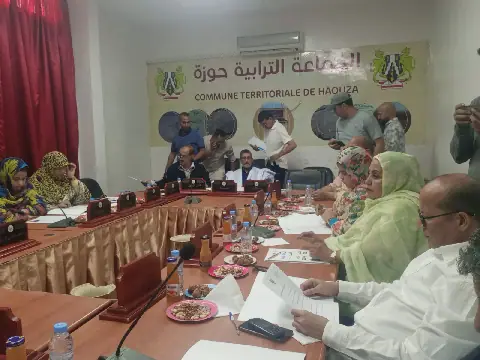
Egyptian Minister of Local Development and Environment, Dr. Manal Awad, highlighted the significance of the Extended Producer Responsibility (EPR) system in transitioning waste management from a legislative framework to practical implementation. She emphasized the need to define roles and responsibilities of various stakeholders to ensure clear commitments and effective waste management. Dr. Awad made these remarks during a consultative meeting on EPR, organized by the Egyptian Waste Management Regulatory Agency.
The meeting brought together experts and specialists in waste management, including Dr. Khaled Fahmy, Executive Director of the Center for Environment and Development for the Arab Region and Europe (CEDARE), and former Minister of Environment, Yasser Abdullah, CEO of the Waste Management Regulatory Agency. Discussions focused on Egypt's experience, international best practices, and challenges in implementing EPR. Dr. Awad noted that the private sector and youth are crucial partners in EPR, and their participation is essential for effective waste management.
Dr. Awad pointed out that one of the main challenges is the readiness of the private sector to handle EPR-related contracts and commitments. She stressed the importance of qualifying companies and enhancing their technical and organizational capacities to enable them to play an effective role in EPR implementation. The minister also emphasized the need for clear and accessible mechanisms, as well as incentives, to encourage citizens to return products and waste.
Dr. Khaled Fahmy explained that EPR involves producers taking responsibility for the waste generated by their products, supporting the transition to a circular economy. He noted that the ultimate goal of a circular economy is to help waste management sectors move to higher stages of processing, reuse, and recycling. Fahmy also highlighted the importance of learning from international experiences, particularly European ones, while considering Egypt's unique economic and institutional context.
The meeting also featured discussions on international experiences and lessons learned, presented by CEDARE. Yasser Abdullah, CEO of the Waste Management Regulatory Agency, provided a detailed overview of Egypt's EPR system, including legislative and institutional frameworks, progress made, and future steps. Participants emphasized the need to transition from the legislative phase to practical implementation, leveraging international experiences and addressing existing challenges.
The consultative meeting concluded with a set of recommendations, focusing on the need for effective implementation of EPR, collaboration between stakeholders, and continued efforts to address challenges. The Egyptian government has been working to develop a comprehensive waste management system, with a focus on EPR as a key component. The system aims to reduce waste, promote recycling, and encourage sustainable practices.
In related news, Egypt's transportation and logistics sector has seen significant developments, including a meeting between Egyptian Transport Minister, Kamel El-Wazir, and his Tanzanian counterpart, Prof. Makame Mbarawa, to discuss potential strategic partnerships in transportation. Additionally, Egypt's Damietta port has reported a total of 19 ships handling containers and general cargo.
Key points
- Egyptian Minister of Local Development and Environment, Dr. Manal Awad, emphasizes private sector and youth participation in Extended Producer Responsibility (EPR) system.
- EPR aims to transition waste management from legislative framework to practical implementation, promoting a circular economy.
- Egypt's waste management sector faces challenges, including private sector readiness and need for clear mechanisms and incentives.