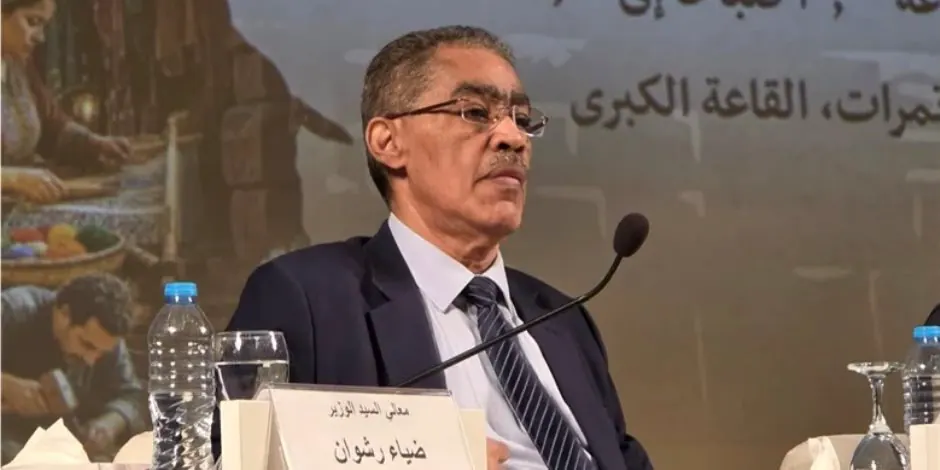
Egyptian Minister of State for Information, Diaa Rashwan, has emphasized that national identity is closely linked to culture and way of life. He noted that understanding identity requires a combination of social sciences, anthropology, political science, history, and geography. Rashwan made these remarks during the second day of the conference, "National Identity: Rooted and Renewed," held at the Bibliotheca Alexandrina from September 21 to 23. The conference is under the auspices of President Abdel Fattah El-Sisi.
Rashwan explained that culture, from an anthropological perspective, encompasses not only knowledge but also a way of life, including thought patterns, values, customs, traditions, and social norms. He stressed that each society has a unique cultural pattern shaped over long periods. Additionally, Rashwan highlighted that identity and culture are inextricably linked, with culture forming the framework within which a sense of belonging develops.
The minister cited Egypt as a historical example of a state-nation, where the Egyptian personality has absorbed various influences from different peoples and civilizations over thousands of years while maintaining its cultural distinctiveness. He pointed to Alexandria as a clear example of Egyptian culture's ability to absorb diversity and multiple influences.
Rashwan discussed the risks to national identity, noting that changes in way of life can manifest in daily practices, but he believes Egyptian culture has a significant degree of continuity. He warned against underestimating the impact of social media on identity, stating that young people are exposed to virtual worlds and different life approaches through these platforms.
However, Rashwan emphasized that the most significant danger lies in the impact of the virtual world on the sense of belonging. He noted that this sense can be affected when citizens, especially young people, feel that their country does not provide them with sufficient opportunities to achieve their aspirations or build their future.
Rashwan also addressed the influence of conservative groups and currents on the concept of identity, stressing that the discussion should not be limited to religious groups alone. He argued that national identity does not necessarily coincide with religious identity, citing examples of Muslims in different countries with varying lifestyles, customs, and local cultures.
Finally, Rashwan concluded that preserving national identity is not only linked to maintaining political stability but also involves protecting the way of life, culture, and societal specificity. He emphasized that political systems can change in short periods, while culture takes centuries to form.
Key points
- National identity and religious identity do not necessarily align.
- Egyptian culture has a significant degree of continuity despite changes over time.
- The sense of belonging can be affected by the virtual world and a lack of opportunities for young people.