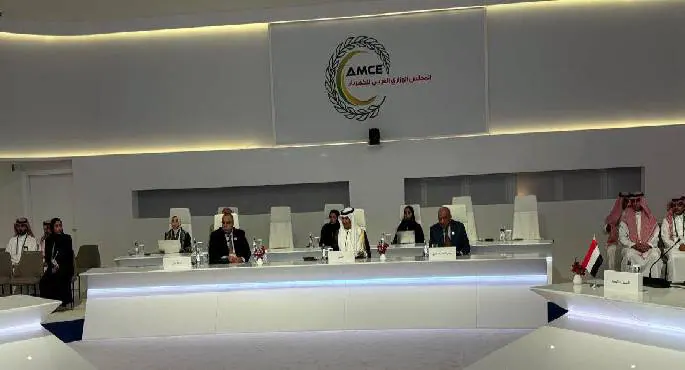
Egyptian Minister of Electricity and Renewable Energy, Dr. Mahmoud Essmat, highlighted the crucial role of the Arab electricity interconnection project in driving economic and social development in the Arab world. The project aims to enhance cooperation and integration among Arab countries in the electricity sector. Dr. Essmat made these remarks during the 16th session of the Arab Ministerial Council for Electricity, held in Riyadh, Saudi Arabia. The council's meeting focused on promoting Arab cooperation in the electricity sector.
Dr. Essmat pointed out that 10 Arab countries signed the Arab Unified Electricity Market Agreement in December 2024, laying the groundwork for the project's implementation. The agreement aims to facilitate the exchange of electricity among Arab countries, promoting economic integration and cooperation. The minister emphasized the importance of following up on the implementation of the council's decisions through the guidance committee and the committee of electricity experts.
The Arab electricity interconnection project has made significant progress, with several meetings held to discuss its implementation. The project aims to connect the electricity grids of Arab countries, enabling the exchange of electricity and promoting energy security. Dr. Essmat reviewed the achievements made so far, including the establishment of a working group to develop the project's technical studies.
The Egyptian minister highlighted the importance of the project's pilot phase, which involves the interconnection of Jordan, Saudi Arabia, and Egypt. The pilot phase aims to test the project's technical and operational aspects, paving the way for its expansion to other Arab countries. The project is expected to enhance energy security, promote economic integration, and support sustainable development in the Arab world.
In addition to the Arab electricity interconnection project, the council discussed other issues related to renewable energy and energy efficiency. The council organized two events to mark the Arab Energy Efficiency Day in 2025 and 2026, highlighting the importance of energy efficiency in promoting sustainable development. The council also discussed ways to enhance the use of renewable energy sources and improve energy efficiency in Arab countries.
Dr. Essmat emphasized the need for continued cooperation and coordination among Arab countries to achieve the project's objectives. He encouraged the Arab countries to build on the progress made so far and to continue working towards the implementation of the Arab Unified Electricity Market Agreement. The minister also expressed his appreciation to the Saudi government for hosting the council's meeting and to the Arab League and the committees of electricity experts and renewable energy for their efforts.
The 16th session of the Arab Ministerial Council for Electricity concluded with a call for continued cooperation and coordination among Arab countries to promote the integration of the electricity sector. The council's meeting highlighted the importance of the Arab electricity interconnection project in driving economic and social development in the Arab world. The project is expected to have a positive impact on the region's energy security, economic integration, and sustainable development.
Key points
- The Arab electricity interconnection project aims to enhance cooperation and integration among Arab countries in the electricity sector.
- The project has made significant progress, with several meetings held to discuss its implementation.
- The project's pilot phase involves the interconnection of Jordan, Saudi Arabia, and Egypt.