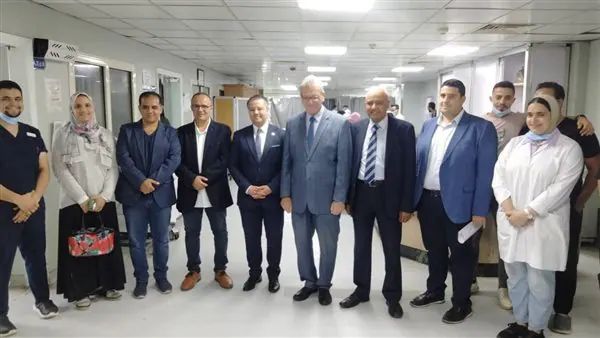
A group of Egyptian medical graduates from 2006, known as the "Dofat Al-Khair" or "Batch of Good," have transformed their 20-year friendship into various initiatives to support hospitals and patients in need. The batch, which graduated from the faculty of medicine at Benha University, has maintained strong bonds of friendship and camaraderie since their graduation. These relationships have evolved into organized charitable efforts aimed at providing medical equipment and supplies to government hospitals.
The batch's charitable work was further motivated by the martyrdom of one of their colleagues, Dr. Islam Bakri. His death prompted the doctors to launch initiatives for ongoing charity, which eventually grew into a collective effort to serve patients. According to Dr. Ahmed Anwar, a representative of the batch, their communication has been continuous since graduation, initially through a group for exchanging news and updates on their personal lives.
The batch's initiatives have been diverse, ranging from providing medical equipment to supporting hospitals. They have contributed to several medical institutions, including Benha University Hospitals, which received three fully equipped intensive care beds worth 500,000 Egyptian pounds. They also supported Benha Specialized Children's Hospital with an echocardiogram device, four incubators, and a light capsule for treating jaundice.
The batch's charitable efforts are guided by a democratic process, where members vote to determine the priorities of their initiatives. According to Dr. Hemsat Al-Nouri, a representative of the 2006 batch, the batch identifies actual needs by having each doctor propose a hospital or department that requires support, along with the necessary equipment or supplies.
The batch's contributions have extended beyond Benha University Hospitals. They have also supported other medical institutions, including Benha Fever Hospital, which received an artificial respirator for pediatric care, and Abu El-Rish Children's Hospital. Additionally, they have contributed to the National Cancer Institute.
The experience of the 2006 batch demonstrates that years of graduation do not mark the end of camaraderie, but rather give it a broader meaning. Their medical expertise has become a means of giving back, and their long-standing friendships have translated into tangible initiatives that impact patients' lives.
The charitable work of the "Dofat Al-Khair" batch serves as an example of the positive impact that collective efforts can have on healthcare. By pooling their resources and expertise, they have made a significant difference in the lives of patients and the healthcare system in Egypt.
Key points
- The batch's charitable efforts are guided by a democratic process, where members vote to determine the priorities of their initiatives.
- The batch has contributed to several medical institutions, including Benha University Hospitals, Benha Specialized Children's Hospital, and Abu El-Rish Children's Hospital.
- The batch's experience demonstrates that years of graduation do not mark the end of camaraderie, but rather give it a broader meaning.