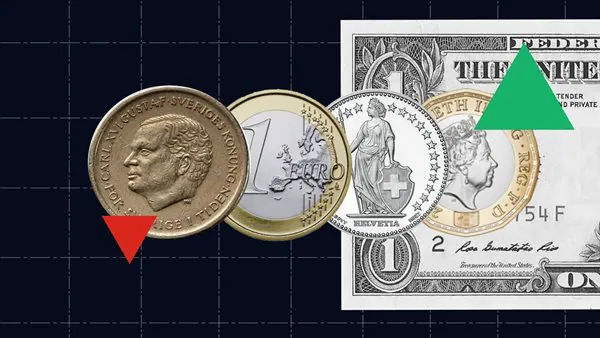
The US dollar index maintained its stability during global trading sessions on Friday, October 2, 2026, hovering at 101.76 points for buying. This development occurred amidst ongoing uncertainty in financial markets, as investors closely monitor geopolitical and economic updates that significantly influence the dollar's trajectory. Market participants are keenly awaiting US economic data, particularly inflation rates and labor market indicators, which directly impact monetary policy decisions.
The dollar's stability is largely attributed to its safe-haven appeal, with investors seeking refuge in the currency due to rising geopolitical tensions, especially in the Middle East. The US dollar index has exhibited a relatively stable performance, with a slight inclination towards growth, driven by persistent global uncertainties. This has led to a cautious approach among investors, resulting in the dollar's value remaining strong against major currencies.
In recent weeks, the US Dollar Index has displayed a fluctuating trend, oscillating around 99-100 points. This volatility is largely attributed to the prevailing economic uncertainty and concerns over slowing growth in major economies. Analysts believe that the index's current range-bound movement is a result of the balance between various factors, including US inflation data, monetary policy outlook, and ongoing geopolitical tensions.
Market experts anticipate that the US dollar will maintain its relative strength in the coming period, particularly if the current geopolitical situation persists without a clear resolution. Investors are closely watching the US Federal Reserve's interest rate decisions and upcoming US economic data releases. The dollar's prospects for further gains are present in the short term, but significant movements will likely depend on substantial changes in the global economy or an escalation of international crises.
The US Federal Reserve's monetary policy decisions will play a crucial role in shaping the dollar's trajectory. Any adjustments to interest rates or forward guidance may influence market expectations and subsequently impact the dollar's value. Moreover, the ongoing global economic trends, including inflationary pressures and growth concerns, will continue to shape the dollar's performance.
Egypt, as a significant player in the global economy, is closely monitoring these developments. The country's economic authorities are likely to consider the implications of the dollar's stability on its own economic policies, particularly with regards to foreign exchange and trade. As the global economic landscape continues to evolve, Egypt's policymakers will need to remain vigilant and adapt to changing market conditions.
In conclusion, the US dollar index's stability at 101.76 points reflects the current market sentiment, driven by a combination of factors including geopolitical tensions, economic uncertainty, and monetary policy expectations. As global markets continue to navigate these challenges, investors will remain focused on key economic indicators and policy decisions that will shape the dollar's trajectory in the coming period.
Key points
- The US dollar index remained stable at 101.76 points during Friday's global trading sessions.
- The dollar's stability is driven by its safe-haven appeal amid rising geopolitical tensions.
- Market experts anticipate that the US dollar will maintain its relative strength in the coming period.