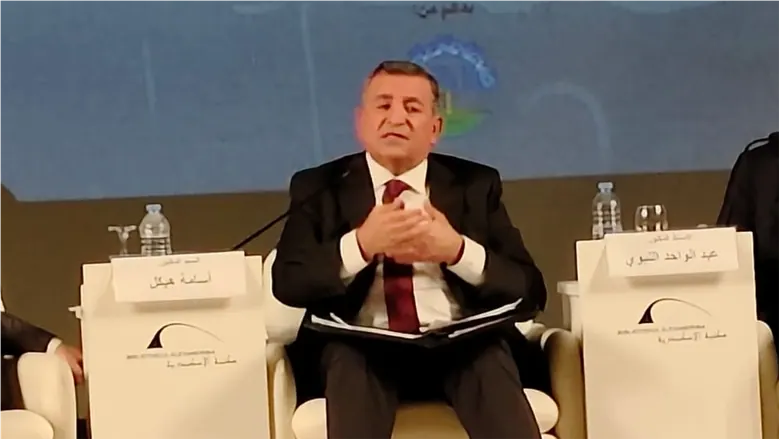
Former Egyptian Minister of Information Osama Heikal stated that Egypt's national identity is deeply intertwined with its national security. Heikal highlighted that the Egyptian identity has been shaped over thousands of years through a rich historical, cultural, and civilizational heritage. This identity encompasses ancient Egyptian civilization, the Christian component, and the Arab and Islamic elements, in addition to the language, history, collective memory, and shared destiny of its people.
Heikal emphasized the importance of Egyptians taking pride in the various elements of their national identity. He pointed out that Egypt is not merely a country with a Muslim majority but a nation with a profound history, culture, language, and collective memory, as well as a shared future. This perspective, he believes, is essential in fostering a sense of unity and shared citizenship among Egyptians.
One of the challenges associated with the discourse of some Islamist political currents, according to Heikal, is the confusion between religious affiliation and national affiliation. He stressed that while the religious component is a significant element of Egyptian identity, it does not define the entirety of the national identity. Heikal advocated for a comprehensive framework that preserves the concept of citizenship and shared destiny among Egyptians.
Heikal also discussed some slogans associated with the political discourse of the Muslim Brotherhood, such as "Islam is the solution." He noted that there was a gap between these slogans and the practical political experience of the Brotherhood during their period in power. Heikal further addressed the use of religious texts by some currents to support political positions, emphasizing that the Palestinian issue should be viewed as a matter of national and human rights, rather than being monopolized by a particular group or political current.
The former Minister of Information underscored that confronting extremist ideas is not achieved by dividing society but by consolidating the concept of citizenship and a comprehensive national identity. He stressed the importance of a discourse that promotes national partnership, making political differences a subject for dialogue rather than a means to dismantle society. Heikal concluded that the Egyptian national identity is not in opposition to religious identity but rather encompasses it as one of its components.
Heikal called for a discourse that combines pride in religion and pride in the nation, preserving the concept of a shared destiny among all Egyptians. The "National Identity: Rooted and Renewed Vision" conference, where Heikal made these remarks, took place at the Bibliotheca Alexandrina from September 21 to 23, 2026, under the auspices of President Abdel Fattah El-Sisi. The conference was organized in collaboration with various Egyptian ministries and the Alexandria Governorate.
The conference brought together numerous officials, experts, and specialists to discuss issues related to national identity, including the risks of extremist discourse and the impact of digital transformations on identity and belonging. The event featured sessions that examined the challenges facing national identity and the role of various stakeholders in promoting a cohesive and inclusive understanding of Egyptian identity.
Key points
- The Egyptian national identity is multifaceted, comprising historical, cultural, and religious components.
- Former Minister Heikal emphasizes the importance of preserving the concept of citizenship and shared destiny among Egyptians.
- The "National Identity: Rooted and Renewed Vision" conference aims to promote a comprehensive understanding of Egyptian identity and its various components.