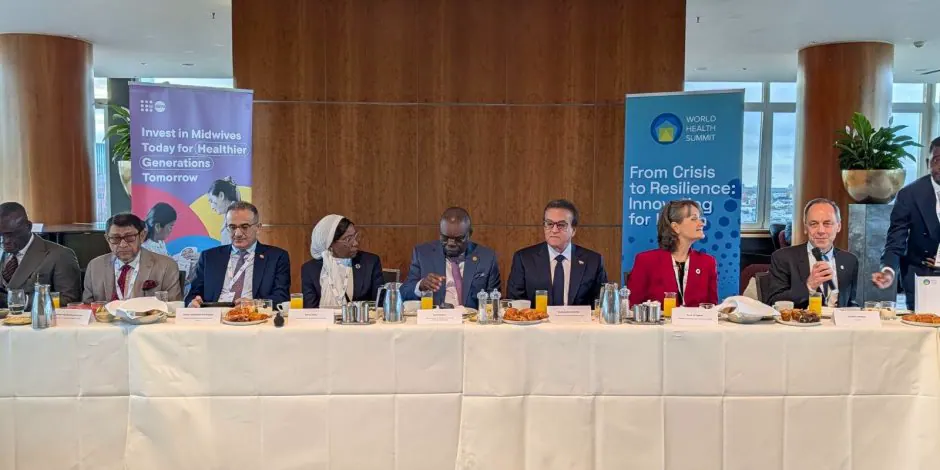
Egyptian Health Minister Dr. Khaled Abdel Ghafar participated in a roundtable discussion titled "From Crisis to Resilience: Southern Partnerships to Accelerate Midwifery Services and Health Security." The event took place on the sidelines of the Berlin Health Summit and brought together health ministers from several countries, including Sierra Leone, Rwanda, Angola, Bangladesh, Ukraine, and Yemen. Representatives from international organizations and global funding agencies also attended.
During the roundtable, Dr. Abdel Ghafar presented Egypt's vision for developing the maternal and child healthcare sector. He emphasized that investing in midwifery and implementing care models not only improves the healthcare workforce but also represents a strategic investment with strong economic returns. This, in turn, supports the resilience and sustainability of the entire healthcare system.
The Egyptian minister highlighted his country's focus on reducing unnecessary cesarean deliveries and promoting safe natural childbirth. This effort is part of the National Midwifery Strategy 2023-2030, which aims to improve the quality of primary healthcare services and expand comprehensive health coverage. Dr. Abdel Ghafar also underscored the role of midwifery services in achieving significant gains in public health and socio-economic development.
Dr. Hussam Abdel Ghafar, the official spokesperson for the Egyptian Health Ministry, stated that the minister emphasized the importance of integrating midwifery services into national health security responses. This includes providing comprehensive care and supporting the state's plans to reduce maternal and child mortality rates. The roundtable discussion also highlighted the need for cooperation among southern countries to exchange expertise in simulation-based training and digitalization.
Participants in the roundtable discussion agreed on the importance of mobilizing strategic funding and high-level political commitments to develop the midwifery profession. They also emphasized the need to integrate midwifery into national health security frameworks and emergency response plans. The attendees concurred on prioritizing the update of education and training systems through modern simulation tools, digital applications, and evidence-based innovations.
The discussion concluded with an agreement on initial steps to enhance midwifery services and strengthen health systems. These steps aim to build more resilient and sustainable healthcare systems. By working together, countries can share knowledge and best practices to improve maternal and child healthcare outcomes.
The Egyptian Health Ministry's participation in the Berlin Health Summit reflects the country's commitment to global health cooperation and its efforts to enhance health security and midwifery services. The summit provided a platform for Egypt to share its expertise and learn from other countries' experiences in addressing healthcare challenges.
Key points
- Egypt's Health Minister emphasizes the importance of investing in midwifery services to achieve strong economic returns and improve healthcare outcomes.
- The National Midwifery Strategy 2023-2030 aims to improve the quality of primary healthcare services and expand comprehensive health coverage in Egypt.
- Participants in the roundtable discussion agree on the need for cooperation among southern countries to exchange expertise in simulation-based training and digitalization.