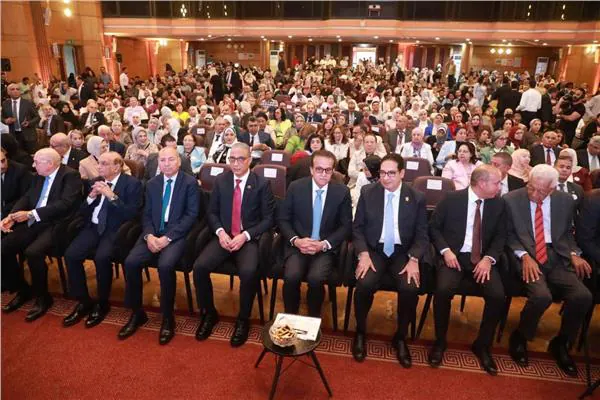
Egyptian Health Minister Dr. Khalid Abdel Ghaffar recently attended the scientific conference of Qasr Al-Aini Faculty of Medicine, Cairo University, which was held under the theme "Emergency and Disaster Medicine in a Changing World." The event was attended by university presidents, health officials, and academic leaders. During his speech, Dr. Abdel Ghaffar emphasized that Qasr Al-Aini is a comprehensive scientific and humanitarian institution that has produced generations of medical professionals who have contributed to building Egypt's healthcare system.
Dr. Abdel Ghaffar highlighted the faculty's legacy, which imposes a future responsibility to start a new phase of development that keeps pace with scientific and technological transformations. He praised Qasr Al-Aini's success in combining medical education, scientific research, and healthcare, producing distinguished generations of medical professionals and making Egyptian medicine a leader in the region. The minister also stressed that emergency and disaster medicine is a fundamental pillar of Egypt's healthcare system.
According to Dr. Abdel Ghaffar, Egypt has established a comprehensive system for crisis management, which includes regular training, improving facility preparedness, and enhancing coordination and efficiency of medical teams. He described the relationship between the Ministry of Health and Qasr Al-Aini as a complementary partnership in serving citizens' health, reflected in initiatives, training programs, and scientific committees. The minister emphasized that crisis management begins with planning and training and that disaster medicine is an essential part of healthcare security.
Dr. Ibrahim Sadek, Governor of Cairo, stated that exceptional circumstances test the efficiency of healthcare systems, requiring a comprehensive system of qualified personnel, continuous training, rapid decision-making, and efficient resource management and coordination between agencies. Meanwhile, Dr. Ahmed Al-Ansari, Governor of Giza, discussed the cooperation between Giza and Cairo University, which has led to the development of healthcare facilities, improved personnel efficiency, and organized free medical convoys.
Dr. Sharif Al-Basha, head of the Health Committee in the House of Representatives, emphasized that Qasr Al-Aini is a national scientific institution that has contributed to preparing generations of doctors. He stressed the importance of investing in human capital. Dr. Mohamed Sami Abdel Sadek, President of Cairo University, reviewed the university's achievements, including its ranking among the top universities globally and its expansion in programs and international student enrollment.
Dr. Hussein Salah, Dean of Qasr Al-Aini Faculty of Medicine, stated that serving society is a top priority through distinguished medical services, continuous medical education, and preparing medical personnel. The conference was attended by prominent figures in the healthcare and academic sectors, highlighting the importance of cooperation and investment in human capital to improve healthcare services.
The scientific conference of Qasr Al-Aini Faculty of Medicine aimed to discuss the latest developments in emergency and disaster medicine and the challenges faced by healthcare systems in Egypt and worldwide. The event provided a platform for experts to share their experiences and knowledge, emphasizing the need for continuous training and preparedness to face medical emergencies and disasters.
Key points
- The Egyptian government is prioritizing investment in human capital and healthcare infrastructure to improve the country's healthcare system.
- Qasr Al-Aini Faculty of Medicine plays a crucial role in providing medical education, training, and services to the Egyptian community.
- Emergency and disaster medicine is a fundamental aspect of Egypt's healthcare system, with a focus on crisis management, preparedness, and response.