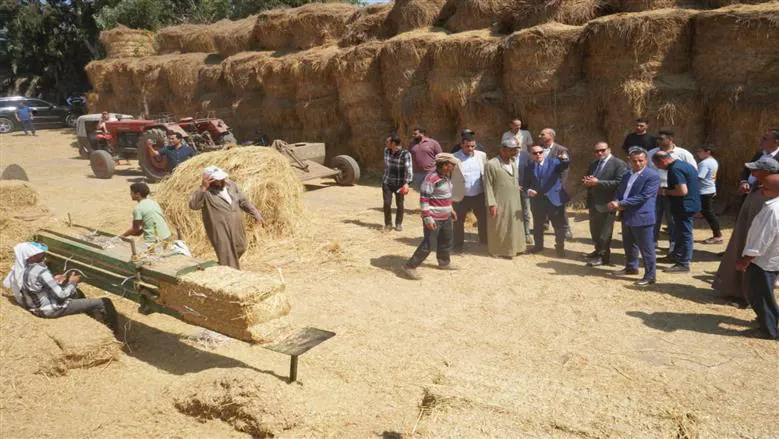
The Governor of Egypt's Western province, Dr. Alaa Abdel Maati, recently inspected a rice straw collection site in the village of Bashbish. This visit aimed to oversee preparations for the rice harvest season and ensure that collection sites and mechanisms for dealing with rice straw are in place. The goal is to utilize the straw and limit the burning of agricultural waste.
According to the governor, the province began preparing for the rice harvest season early. This included a coordinating meeting with relevant parties and ongoing awareness campaigns and advisory seminars for farmers. He emphasized that the province will not permit the burning of rice straw and will intensify field monitoring to immediately address any violations.
The total area planted with rice in the Western province is approximately 131,408 feddans. Collection sites for rice straw are distributed across the province, making it easier to gather and utilize the straw instead of burning it. The governor noted that rice straw represents a significant agricultural resource that can be exploited in various fields.
Rice straw can be used as livestock feed, in the production of paper, cardboard, and wood pulp, and in generating organic fertilizer for soil enrichment. It can also serve as an alternative agricultural medium for growing mushrooms. The governor stressed that the province will continue to educate the public on how to benefit from rice straw while protecting the environment and citizens' health.
The initiative to collect and utilize rice straw is part of a broader effort to combat the "black cloud," a term used to describe the severe air pollution caused by the burning of agricultural waste. By promoting the use of rice straw, the province aims to reduce the environmental impact of rice cultivation and improve air quality.
The governor's inspection of the collection site highlights the province's commitment to sustainable agricultural practices and environmental conservation. The province's efforts to engage farmers and the community in the collection and utilization of rice straw are seen as crucial steps towards mitigating the environmental effects of rice production.
The success of this initiative could serve as a model for other regions facing similar environmental challenges. By turning rice straw into a valuable resource, the province hopes to set an example for sustainable agricultural practices that balance economic and environmental considerations.
Key points
- The governor emphasized the importance of utilizing rice straw to limit the burning of agricultural waste and promote environmental conservation.
- The province has distributed collection sites for rice straw across the region to facilitate its gathering and utilization.
- Rice straw can be used in various industries, including livestock feed, paper production, and organic fertilizer generation.