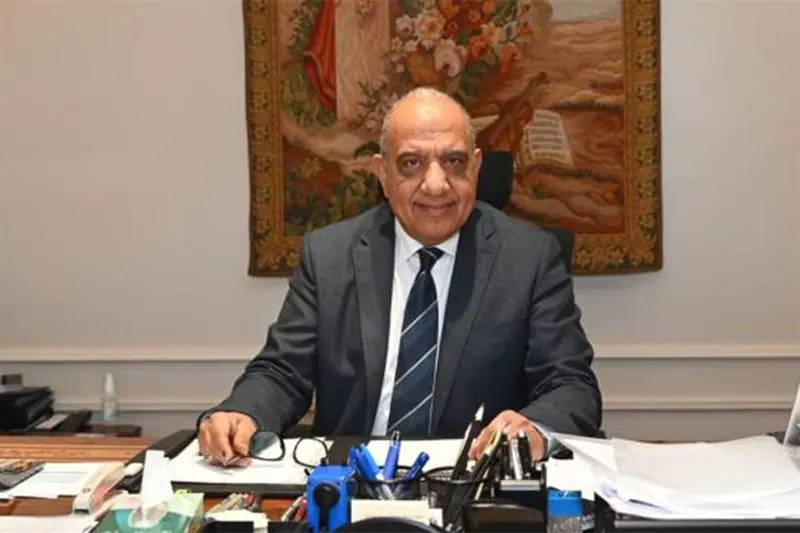
The Egyptian government has initiated a review of electricity tariffs to reduce the financial burden on households, particularly those with medium incomes. Minister of Electricity and Renewable Energy, Mahmoud Esmat, revealed that the government is examining consumption brackets to adjust tariffs. This move comes as the sector's subsidies have exceeded 108 billion EGP. Esmat assured that the government aims to balance the sector's financial equilibrium with the need to maintain assistance for low-income households.
The Egyptian electricity sector faces significant financial challenges, with monthly fuel supply costs ranging between 13 and 20 billion EGP. The minister emphasized that the government understands the high electricity prices burden on citizens. He stated that there will be no further price increases, following adjustments in 2024 and 2026. The current tariff structure comprises seven brackets, with the first two covering around 7-8 million subscribers, who pay 68 piasters per kilowatt-hour, significantly lower than the estimated production and transmission cost of 270 piasters.
Residential consumption accounts for 38-40% of the country's total electricity demand. Six out of the seven tariff brackets receive subsidies, while consumers exceeding 2,000 kilowatt-hours pay the actual cost of electricity. The subsidy mechanism involves various stakeholders, including the Ministries of Petroleum and Finance. Esmat explained that the subsidy represents the difference between the cost and the selling price. This complex system also involves the recharging of prepaid meters, which can lead to increased deductions when consumers move to higher brackets.
The Egyptian government has made significant investments in the electricity sector, adding over 35 gigawatts of capacity since 2014. The current installed capacity stands at 60 gigawatts, with 50 gigawatts from fossil fuels and 10 gigawatts from renewable sources. The minister highlighted that the country's demand for electricity grows by 6-7% annually, driven by urbanization, industrialization, and large infrastructure projects. To meet future needs, the ministry has allocated a gigawatt for artificial intelligence projects and approved 3.4 gigawatts for energy-intensive factories under construction.
Egypt aims to increase the share of renewable energy in its electricity mix to 42% by 2028 and 45% by 2030. The plan includes developing nearly 29 gigawatts of wind and solar capacities, complemented by 14 gigawatts of battery storage. The government has allocated 37 billion EGP for electricity transmission in the 2026-2027 budget. Additionally, investments in networks are expected to reach 160 billion EGP, with an additional 190 billion EGP required for new projects.
Minister Esmat assured that the investments in production and networks will enable the country to meet demand without resorting to power outages. Egypt has not experienced scheduled outages during the summers of 2025 and 2026. The minister emphasized the importance of regional interconnections with Saudi Arabia, Libya, Sudan, and Jordan to support exchanges and reassure investors. The Dabaa nuclear power plant, with a planned capacity of 4,800 megawatts, is expected to contribute to diversifying production sources and reducing fossil fuel consumption.
The minister reiterated the ministry's commitment to combating non-technical losses, including electricity theft, and restructuring the sector to limit pressure on tariffs. Since 2024, Egypt has implemented several tariff adjustments, including a 14% increase in residential tariffs for prepaid meters and a 20% rise in commercial tariffs. A recent adjustment on July 31 increased most residential tariffs by 12%, on average. The government aims to balance the sector's financial equilibrium with the need to maintain assistance for low-income households.
Key points
- The Egyptian government has initiated a review of electricity tariffs to alleviate household bills, as subsidies surge to over 108 billion EGP.
- Egypt aims to increase the share of renewable energy in its electricity mix to 42% by 2028 and 45% by 2030.
- The Dabaa nuclear power plant is expected to contribute to diversifying production sources and reducing fossil fuel consumption.