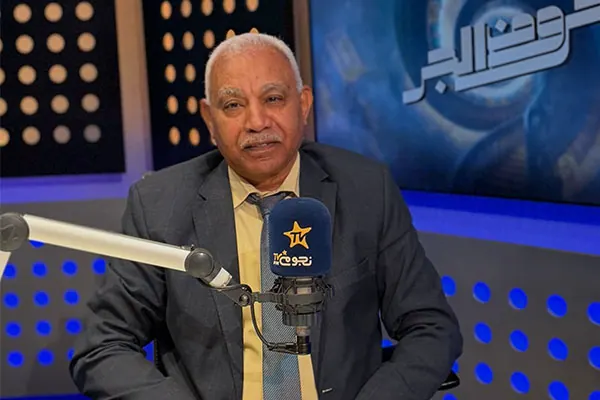
In a recent interview on Egyptian radio station Nogoum FM, General Mohamed Abd El-Moneim, a former head of the Egyptian military's intelligence gathering unit, shared insights into the strategic planning behind the 1973 Arab-Israeli War. The general, who also served as director of the Center for Strategic Studies of the Egyptian Armed Forces, discussed the importance of accurate intelligence in military operations. He explained that information gathered by intelligence units, along with data from various other sources, was crucial for the success of any military endeavor.
General Abd El-Moneim highlighted the role of Egyptian intelligence units in collecting data on Israeli military activities. These units operated from observation posts, monitoring daily Israeli military routines and activities along the front lines. Additionally, some intelligence operatives worked behind enemy lines, sometimes staying for up to six months before being replaced. The information collected was not limited to military data but also included details on Israeli troop movements, leave schedules, and recreational activities.
The general recounted the story of "Koshkol El-Gamasy," a notebook used by Colonel Salah Fahmy to study the optimal timing for the Egyptian military to cross the Suez Canal. According to General Abd El-Moneim, the chosen time, 2pm, was selected to ensure that the sun was not in the faces of either Egyptian or Syrian forces during the operation. This timing was also coordinated with Syrian military forces and took into account weather and lunar conditions.
Colonel Fahmy documented his findings in the notebook, which was later requested by Major General Mohamed El-Gamasy. The notebook's contents were eventually translated into the operational plan known as "Plan Badr." General Abd El-Moneim emphasized that the information gathered and the strategic planning that went into the 1973 war were instrumental in Egypt's ability to engage Israeli forces effectively.
The 1973 war, also known as the October War or the Ramadan War, began on October 6, 1973, when Egypt and Syria launched a surprise attack on Israel. The war ended with a ceasefire on October 25, 1973. General Abd El-Moneim's insights provide a unique perspective on the strategic considerations that shaped Egypt's military actions during this conflict.
In the interview, General Abd El-Moneim also reflected on the outcomes of the 1973 war. He noted that Israel's experience in the war and its recognition of Egyptian military capabilities led to Israel's decision to pursue a peace agreement with Egypt. The general emphasized that Egypt's military actions were driven by a desire to protect its national interests and territorial integrity.
The interview with General Abd El-Moneim was part of a radio program called "Harofat Gerrar" (Prepositions), hosted by Youssef El-Husseiny. The program aims to explore significant historical events and strategic issues. General Abd El-Moneim's participation provided valuable insights into Egypt's military history and strategic planning during the 1973 war.
Key points
- The 1973 Arab-Israeli War started at 2pm to ensure optimal conditions for Egyptian and Syrian forces.
- Egyptian intelligence units played a crucial role in gathering data on Israeli military activities.
- The war led to Israel's decision to pursue a peace agreement with Egypt.