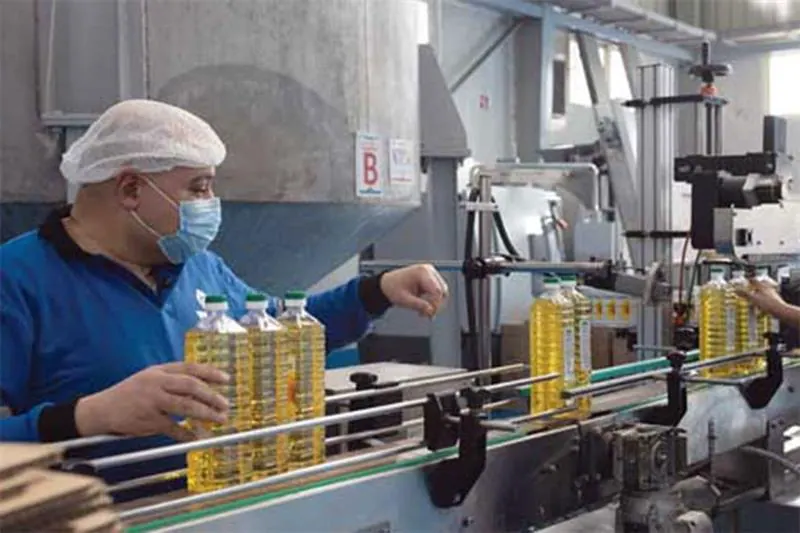
Egypt's food industry exports have experienced significant growth, increasing by 68.3% over four years to reach $6.9 billion in 2025, up from $4.1 billion in 2021. This growth is part of the government's efforts to boost the sector's exports, jobs, food safety, and sustainability. The food industry is a strategic productive sector within the Egyptian economy, closely tied to agriculture, supply chains, logistics, and trade.
The food industry sector contributed around 14% of total non-oil commodity exports in 2025, placing it in third place in terms of export value, after construction materials and chemical products and fertilizers. In the first eight months of 2026, Egypt's food exports reached a new record of around $5.13 billion, rising by 10.8% year-on-year from $4.63 billion in 2025.
The Information and Decision Support Center (IDSC) released a report on sustainable food industries, reviewing the current state of Egypt's food industry sector and its role in supporting food security and economic growth. The report highlighted state efforts to reduce agricultural and food waste, develop supply chains, and foster a transition towards more efficient and sustainable production models.
The food industry sector includes several major industries, such as dairy and dairy products, sugar and sugar-based products, frozen vegetables and strawberries, vegetable- and fruit-based food preparations, and oils, aromatic resins, and their derivatives. The sector's diversity indicates its importance for employment and boosting industrial activity, with workers in the food product industry accounting for 15.4% of the total workforce across the public and private sectors during the fourth quarter of 2024.
The IDSC report noted that the sustainability of the food industry depends on developing various stages of the value chain, ranging from improving agricultural production efficiency and manufacturing inputs to optimizing transportation, storage, and processing, and ultimately reaching markets and end consumers. The report also highlighted challenges in the food industry, including climate change and mounting pressure on natural resources, as well as food loss and waste.
To address these challenges, the government has placed food security at the center of its national strategy through a five-pillar plan to boost self-sufficiency. The plan includes expanding land and crop varieties through technology to raise productivity, developing livestock to reduce the import gap in animal protein, increasing digital development, and modernizing agriculture through improved farming methods.
Egypt has also been taking steps to modernize its grain storage system and flour mills, upgrade storage systems, and link silos to various transportation networks to enhance grain-handling efficiency and minimize waste. The country's total number of silos grew to 87, with a total storage capacity of 3.8 million tons in 2025, up from 32 silos in 2014. Investments in the food industry sector have also grown, reaching $6.6 billion in 2025, compared to $2.2 billion in 2019.
Key points
- Egypt's food industry exports grew 68.3% to $6.9 billion in 2025, up from $4.1 billion in 2021.
- The food industry sector contributed around 14% of total non-oil commodity exports in 2025.
- Egypt's food exports reached a new record of around $5.13 billion in the first eight months of 2026.