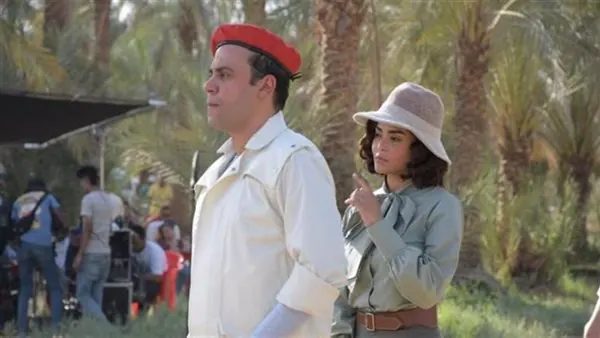
The Egyptian film industry has recently seen a trend towards filming on real-world locations, rather than relying solely on studio settings. One of the latest films to adopt this approach is "شمس الزناتي 2" (Shams El-Zenati 2), which has been filming scenes at actual locations such as the Palace of Abdeen, a historic palace in Cairo. This shift towards location-based filming is not new, but it has gained significant attention in recent years.
The decision to film on location can vary from film to film, with some directors opting for this approach to achieve a more realistic visual representation. Others choose locations that are integral to the storyline or characters. For example, the film "شمس الزناتي 2" also filmed scenes at the Al-Azhar Street and the Prince Bashatak Palace, which are significant locations that match the film's storyline and time period.
Renowned Egyptian director, the late Mohamed Khan, was known for incorporating real-world locations into his films. His movies, such as "Al-Hareef" and "Banat Wast El-Balad", showcased Cairo's streets, neighborhoods, and homes, providing an authentic glimpse into the city's daily life. Khan's approach to filming on location helped to create a sense of realism and immediacy in his films.
Another film that utilized location-based filming is "Mikrofon", directed by Ahmed Abdullah. The film was shot on location in Alexandria, featuring the city's streets, apartments, and shops. The choice of location was not coincidental, as the film explores the city's independent music and art scene. By filming on location, the director was able to capture the city's unique atmosphere and energy.
In the film "Gharam Fi El-Karnak", the city of Luxor was used as a backdrop for the story, with its ancient monuments and streets appearing in several scenes. The film's use of location-based filming added to its visual appeal, particularly in the dance scenes that were filmed amidst the city's ancient landmarks.
The film "Rasa'il El-Bahr", directed by Dawoud Abd El-Sayed, also made use of location-based filming, with the city of Alexandria serving as the main setting. The film showcased the city's streets, neighborhoods, and harbor, providing a nuanced portrayal of life in Alexandria. By moving away from traditional studio settings, the film was able to capture the city's unique character.
The trend towards location-based filming in Egyptian cinema is a positive development, allowing for more authentic and immersive storytelling. By embracing real-world locations, filmmakers can create a more engaging and realistic visual experience for audiences. This approach also provides an opportunity for Egyptian films to showcase the country's rich cultural heritage and diverse landscapes.
Key points
- Egyptian films are shifting towards filming on real-world locations to achieve a more authentic visual experience.
- The use of location-based filming allows for a more nuanced portrayal of Egyptian life and culture.
- This trend is a positive development for Egyptian cinema, enabling filmmakers to create more immersive and engaging stories.