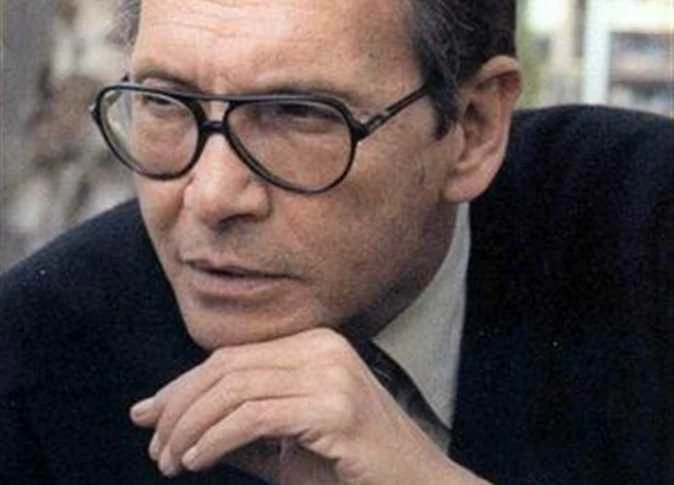
Egyptian film director Shadi Abdel Salam passed away on October 8, 1986. He was born on March 15, 1930, in Alexandria, Egypt. Abdel Salam graduated from Victoria College in Alexandria in 1948 and later studied theater arts in London from 1949 to 1950. He also graduated from the Cairo College of Fine Arts in 1955, where he was heavily influenced by Islamic art under the guidance of renowned architect Hassan Fathy.
Abdel Salam began his career as a set designer and assistant director in several films, including the Polish film "The Pharaoh" directed by Kawalerowicz. This marked the beginning of his journey in the film industry. He went on to work as an assistant director in films such as "Wa Islamah" directed by Andrzej Marton, and "The Civilization" directed by Roberto Rossellini. Abdel Salam also collaborated with director Joseph Mankiewicz on the film "Cleopatra".
Shadi Abdel Salam made significant contributions to Egyptian cinema, directing several short films, including "The Fallahin" which won the Silver Lion award at the Venice Film Festival. Some of his notable works include "Armies of the Sun" and "The Golden Chair of Tutankhamun". However, his most celebrated film is "The Mummy", considered one of the most important Arab films in cinema history. The film received numerous awards at international film festivals, including the Sadoul Prize and the Critics' Prize at the 1970 Carthage Film Festival.
Film critic Tarek El Shenawi praised Abdel Salam's work, stating that he discovered the "ABCs of Egyptian cinema". Abdel Salam's influence extended beyond direction, as he also made a lasting impact on film design and costumes. He worked on several films, including "Wa Islamah", "Antar Ben Shaddad", and "Al-Maz and Abdo Al-Hamouli". Abdel Salam also designed sets and costumes for Youssef Shahine's film "The Nasser Salah Al-Din".
In addition to his filmmaking career, Abdel Salam served as the director of the Experimental Film Center at the Egyptian Ministry of Culture. He also taught at the Higher Institute of Cinema from 1963 to 1969. Abdel Salam was working on his second major project, "The Tragedy of the Big House" or "Akhnaton", at the time of his death. Despite multiple attempts to rewrite the script and prepare the designs, the project was never completed due to funding issues.
Abdel Salam's legacy continues to be celebrated in the film industry. In 2000, renowned film director Martin Scorsese presented a restored version of "The Mummy" at the Cannes Film Festival, praising Abdel Salam's work. The film remains a testament to Abdel Salam's innovative storytelling and visual style.
Shadi Abdel Salam's contributions to Egyptian cinema have left a lasting impact. His work continues to inspire new generations of filmmakers and artists. Despite his untimely death on October 8, 1986, Abdel Salam's legacy lives on through his films and the countless lives he touched through his art.
Key points
- Shadi Abdel Salam passed away on October 8, 1986, at the age of 56.
- Abdel Salam directed the critically acclaimed film "The Mummy", which received numerous awards at international film festivals.
- He made significant contributions to Egyptian cinema, working as a director, set designer, and assistant director on several films.