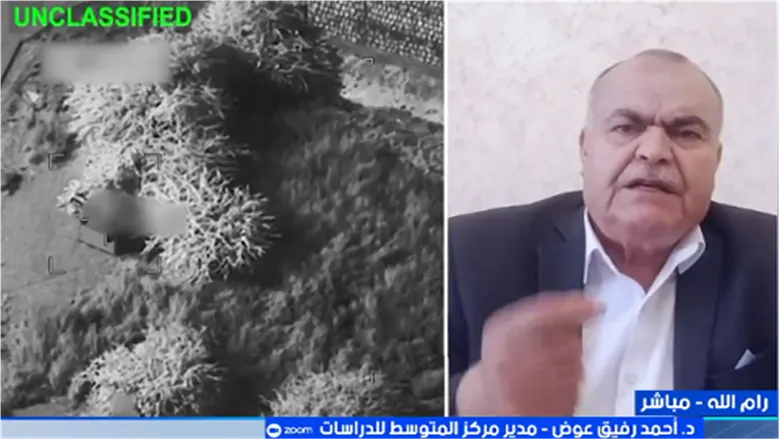
Dr. Ahmed Rafeek Awad, director of the Mediterranean Studies Center, commented on recent statements by the Iranian Revolutionary Guard Corps (IRGC) spokesperson, regarding new weapon capabilities that could "change the geography of war." Awad described these statements as a notable escalation, possibly in response to US President Donald Trump's comments. He suggested these statements may also have psychological and media warfare dimensions.
Awad discussed the ambiguity surrounding the new Iranian weapon, questioning its nature and whether it relates to nuclear, chemical, or biological weapons. He emphasized that the exact nature of the weapon remains unknown. The Egyptian expert also noted that despite escalating statements, the negotiation door between Washington and Tehran has not been completely closed.
According to Awad, the US decision to allow the Iranian delegation to participate in the United Nations General Assembly, along with ongoing mediation efforts, indicates that negotiations are still possible. However, he identified a lack of trust between Washington and Tehran as a significant obstacle to reaching a settlement, with each side maintaining its political and field demands.
Iranian President Masoud Pezeshkian's visit to New York carries multiple implications, including testing the negotiation path. Awad noted that Pezeshkian's ability to impose his vision is limited due to other influential officials within the Iranian system who contribute to decision-making. The Egyptian expert highlighted the complexity of the situation, involving not just the nuclear file but also freedom of navigation and economic pressures.
Awad discussed the Strait of Hormuz, emphasizing that developments have expanded beyond the nuclear issue to include military and economic pressures. He stated that the US seeks to avoid engaging in a comprehensive war, instead using tools like sanctions, pressure, threats, and psychological warfare. The expert warned that an escalation could have significant repercussions for regional countries.
The Egyptian expert stressed that reaching a settlement requires de-escalation and opening mediation channels. He emphasized that continued escalation increases the conflict's cost for all parties, the region, and the world. Awad's comments highlight the need for diplomatic efforts to address the complex situation.
The situation remains volatile, with multiple factors influencing the negotiations between the US and Iran. Awad's insights underscore the importance of understanding the various dimensions of the conflict, including the role of other regional players and the potential consequences of further escalation. The international community watches closely, hoping for a peaceful resolution.
Key points
- The negotiation door between the US and Iran remains open despite escalating statements.
- The lack of trust between Washington and Tehran is a significant obstacle to reaching a settlement.
- De-escalation and mediation are necessary to address the complex situation and avoid further repercussions.