Egyptian strategic expert Mohamed Abdel Monem, former head of the Intelligence Survey Department, has stated that Egyptian President Abdel Fattah El-Sisi's comments on rejecting the militarization of the Red Sea during his meeting with Russian President Vladimir Putin reflect Egypt's vision on maintaining the security and stability of this strategic waterway. Abdel Monem emphasized that these statements are not targeted at any specific country but rather highlight the importance of preserving the Red Sea's nature and preventing it from becoming a field for competition or increased military presence.
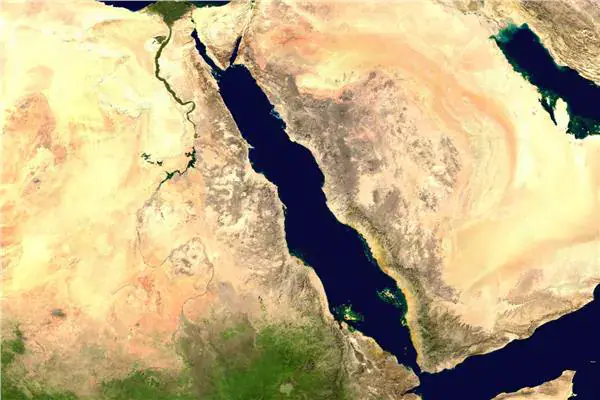
During a television interview, Abdel Monem explained that President El-Sisi's statements were not directed against any particular nation. He pointed out that Egypt's stance is linked to the principle of maintaining the Red Sea's natural status and preventing its transformation into a scene for rivalry or heightened military presence. The Red Sea is considered a closed sea with significant strategic importance due to its geographical location, connecting the East and West as well as the North and South, making it a crucial waterway for international trade and navigation.
Abdel Monem highlighted that the Red Sea's strategic importance is a major factor in the international community's focus on ensuring the security of this waterway. He noted that there is an international vision, particularly among several European countries, on the importance of securing traffic in the Red Sea. This has led to the formation of more than one alliance and international group to work on securing navigation and passage in this vital waterway.
The expert stressed that the multiplicity of international alliances and groups concerned with Red Sea security reflects the magnitude of its strategic importance. He emphasized the need to address its security as an issue related to broad regional and international interests. Abdel Monem also pointed out that the primary responsibility for securing the Red Sea lies with the countries bordering it, as they are the most closely linked to its security and stability and the most affected by any developments or threats that may impact navigation in the region.
According to Abdel Monem, the presence of multiple international groups and alliances working on Red Sea security indicates a shared understanding of its importance. He underlined that Egypt's position on the issue is part of a broader international context that seeks to ensure the Red Sea remains a secure and stable passage for international trade and navigation.
The strategic expert also touched upon the implications of the Red Sea's militarization, suggesting that it could lead to increased tensions and instability in the region. He reiterated that Egypt's stance is centered on preventing such scenarios and ensuring that the Red Sea remains a zone of peace and cooperation among its bordering countries.
In conclusion, Abdel Monem's statements shed light on Egypt's vision regarding the security of the Red Sea. He emphasized the importance of collective responsibility among the countries bordering the Red Sea and the international community in ensuring its security and stability. The expert's insights provide a nuanced understanding of the complexities surrounding Red Sea security and the need for a coordinated approach to address these challenges.
Key points
- The primary responsibility for securing the Red Sea lies with the countries bordering it.
- Egypt's stance on Red Sea security reflects its broader vision of maintaining the waterway's natural status and preventing militarization.
- The multiplicity of international alliances concerned with Red Sea security underscores its strategic importance.