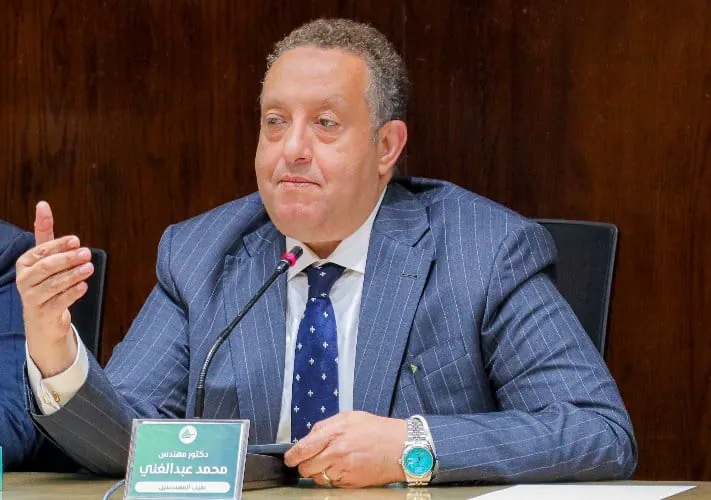
The Egyptian Engineers' Union, led by Dr. Mohamed Abdel Ghani, has highlighted the importance of directing energy sector investments towards sustainable development. This involves not only meeting electricity needs and operating factories but also building national capacities to develop technology, deepen local manufacturing, and create job opportunities. These efforts aim to support Egypt's economic competitiveness and enhance energy security.
Dr. Abdel Ghani participated in a session on investment and financing strategies at the Egypt Energy 2026 conference, emphasizing that energy is closely tied to national security, economic strength, and a country's competitive power. He stressed the need to convert available resources and capabilities into sustainable economic value, reflecting on job opportunities, production levels, and development.
The conference, which brings together representatives from government institutions, international bodies, and Egyptian and global companies operating in the energy sector, was attended by Eng. Yass Mohamed Yass, a member of the Engineers' Union's Higher Council. Dr. Abdel Ghani noted that possessing natural resources is not enough to build a strong energy sector; a country's ability to manage and develop the necessary technology to exploit these resources is also crucial.
Egypt has geographical and natural advantages that support its position in the regional energy market, leveraging its strategic location linking Africa, Asia, and Europe, along with its potential for expanding renewable energy projects like solar and wind power. However, converting these advantages into economic value requires qualified cadres and engineers capable of developing technology and turning ideas into executable projects.
The expansion of renewable energy necessitates significant investments and the development of electricity networks to accommodate new capacities. This situation requires linking plans for energy production expansion with the technical and technological capabilities needed to operate projects efficiently, ensuring that directed investments yield sustainable returns.
Regarding the financing of energy projects, Dr. Abdel Ghani pointed out that attracting capital is not solely dependent on the availability of investment opportunities but also on the confidence in the market's ability to convert these opportunities into sustainable returns. This confidence is fostered by clear and stable regulatory frameworks, transparent procedures, commitment to contracts, and swift decision-making.
Empowering Egyptian engineers is fundamental to localizing technology, with the engineer being the linchpin between investment policies, financial capabilities, and the technical and operational requirements of energy projects. The upcoming phase demands professionals who combine knowledge of modern technology, project economics, and financing, along with the ability to manage contracts, risks, and participate in decision-making based on experience and data.
Key points
- The engineering sector emphasizes the need for technological advancement and empowering local engineers.
- Egypt's geographical and natural advantages support its position in the regional energy market.
- Clear and stable regulatory frameworks are crucial for attracting investments in the energy sector.