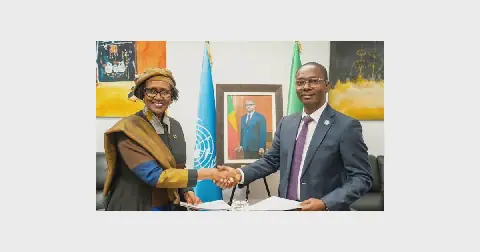
Egyptian Minister of Education and Technical Education, Mohamed Abdel Latif, recently outlined a comprehensive plan to reform the country's education system. The reforms aim to improve the quality of education and produce students who are equipped with the skills needed to succeed in the workforce. The minister highlighted the importance of developing curricula, increasing school attendance, and improving teacher salaries. He also emphasized the need to create technical schools that can provide students with the skills required by the labor market.
The minister's plan has been met with optimism, as it aims to address the challenges facing Egypt's education system. For years, the country has struggled with a lack of quality education, which has hindered the development of its human capital. The minister's plan is seen as a step in the right direction, as it seeks to produce students who are equipped with the skills needed to succeed in the workforce. The plan also aims to reduce the gap between the education system and the labor market.
The concept of ideological subversion, developed by Soviet intelligence officer Yuri Bezmenov, highlights the importance of education in shaping a society. Bezmenov's theory, which was later developed by Western intelligence agencies, explains how a country's education system can be used to dismantle its social fabric. According to Bezmenov, the process of ideological subversion takes 15 to 20 years, which is the time it takes to educate a generation of students.
Bezmenov's theory emphasizes the importance of education in shaping a society's values and beliefs. He argues that a country's education system can be used to promote a particular ideology or set of values, which can ultimately lead to the dismantling of its social fabric. In the context of Egypt, the minister's plan aims to promote a values-based education system that produces students who are equipped with the skills needed to succeed in the workforce.
The Egyptian minister's plan also aims to improve teacher salaries and working conditions. Teachers are currently paid around 15,000 Egyptian pounds per month, which is a significant increase from previous years. The minister has also emphasized the need to create technical schools that can provide students with the skills required by the labor market. This move is seen as a step in the right direction, as it aims to address the skills gap in the Egyptian labor market.
The reforms also aim to promote critical thinking and problem-solving skills among students. The minister has emphasized the need to move away from rote learning and promote a more interactive and engaging learning environment. This move is seen as a step in the right direction, as it aims to produce students who are equipped with the skills needed to succeed in the workforce.
Overall, the Egyptian minister's plan aims to promote a more values-based education system that produces students who are equipped with the skills needed to succeed in the workforce. The plan has been met with optimism, as it seeks to address the challenges facing Egypt's education system. With the right implementation, the plan has the potential to produce a more skilled and productive workforce, which is essential for Egypt's economic development.
Key points
- The Egyptian government has launched a comprehensive plan to reform the country's education system.