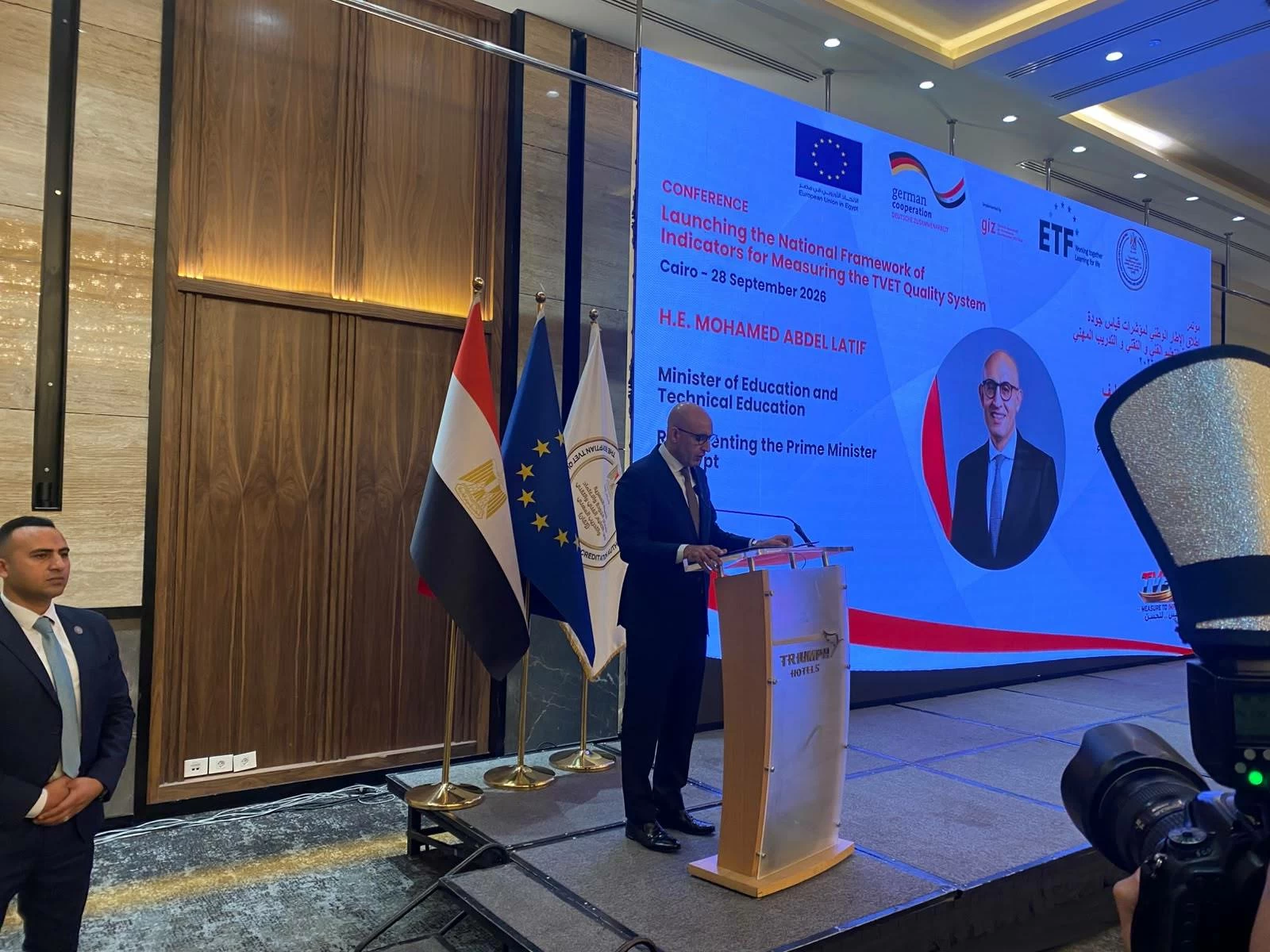
Egyptian Minister of Education and Technical Education, Mohamed Abdel Latif, emphasized that developing the technical and applied education system requires measuring the impact of development efforts on outcomes. He noted that the success of an educational system is not solely determined by the number of programs and projects implemented, but by the actual change in education quality and its ability to meet labor market needs.
Abdel Latif highlighted the importance of the National Skills Framework in assessing student skills and the ability of educational programs to achieve desired outcomes. He stressed that it is crucial to determine whether graduates can effectively integrate into the labor market and that they possess the required skills for various economic sectors.
The Minister explained that the National Skills Framework's core value lies in converting data into knowledge and then into decisions that lead to measurable results. He pointed out that performance indicators should help identify areas of progress and gaps, and determine where resources should be allocated to achieve greater impact.
Abdel Latif emphasized that the National Skills Framework is also linked to rapid changes in the labor market, including technology, artificial intelligence, green economy, and new production patterns. He noted that the question is no longer limited to whether the education system can prepare graduates that match current labor market needs, but also whether it can anticipate and respond to future needs.
The Minister stated that addressing future requirements necessitates establishing a comprehensive and accurate data system to track students' paths from the beginning of their technical education to graduation and transition into the labor market or further education. He stressed the need for unified indicators and measures, continuous data collection, and analysis to develop the education system.
Abdel Latif highlighted the importance of international cooperation in developing Egyptian technical education, citing collaboration with the European Union and the German Development Cooperation. He emphasized that the goal is not to adopt international models wholesale but to utilize global experiences in preparing a national framework that reflects Egyptian priorities and educational system specifics.
The Minister concluded that the success of the National Skills Framework requires coordination between the Ministry of Education, the Egyptian Agency for Quality Assurance and Accreditation in Technical Education and Training, experts, and various educational entities. He stressed that the framework aims to accurately identify skills gaps and direct resources to areas with the greatest impact.
Key points
- The National Skills Framework aims to link education with labor market needs.
- The framework seeks to measure the impact of education on outcomes.
- Egypt is cooperating with international partners to develop its technical education system.