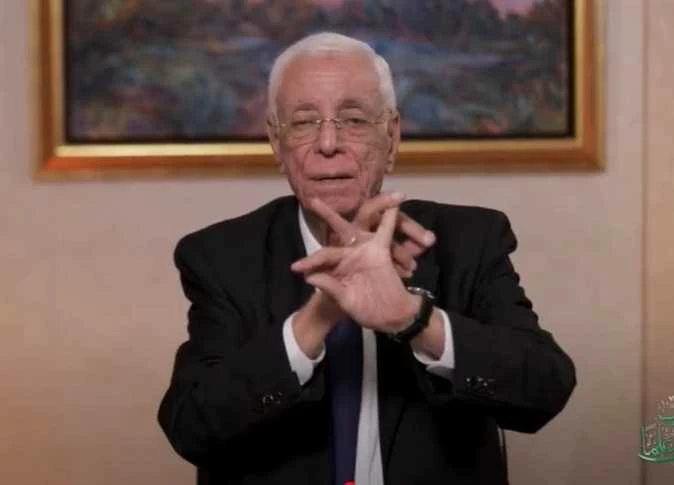
Dr. Hussam Mowafi, a professor of critical care medicine at Cairo University's Kasr Al-Ainy faculty of medicine, has clarified his recent comments on using organs of death row inmates for transplantation. Mowafi stated that his remarks were not a call to action, but rather an idea that requires discussion from religious, legal, and specialized authorities. He emphasized that determining the project's legitimacy or legality is not his expertise.
During a phone interview with journalist Nahal Tayel on the "Details" program broadcast on "Sada El-Balad 2" channel, Mowafi explained that the issue requires consultation with specialists. He mentioned that he suggested seeking guidance from the Grand Imam of Al-Azhar on the religious aspect and the Attorney General on the legal aspect. Mowafi's comments aimed to explore possible solutions to save patients in dire need of organ transplants.
Mowafi stressed that his proposal was motivated by a desire to discuss potential solutions for patients with severe conditions requiring organ transplants. He acknowledged the sanctity of human life and the importance of obtaining consent from the individual concerned. Mowafi reiterated that any discussion of utilizing organs cannot be separated from the person's consent, emphasizing the need to verify the permissibility of the matter according to Islamic law and legislation.
The doctor responded to what he described as inaccurate circulation of his statements, expressing frustration that some individuals attributed quotes to him that he did not make. Mowafi denied saying that organs of death row inmates should be obtained or used for transplantation. He reiterated that his suggestion was merely an idea for discussion, emphasizing the need to consult with relevant authorities before making any judgments.
Mowafi highlighted the complexity of the issue, stating that it requires careful consideration of various aspects. He emphasized that individuals have the right to make decisions about their own bodies, including the option to donate their organs. However, Mowafi stressed that such decisions must be made within the framework of the law and with respect for human rights.
The controversy surrounding Mowafi's comments has sparked a national debate on the ethics and feasibility of using organs from death row inmates for transplantation. While some have expressed support for the idea, others have raised concerns about the moral and legal implications. Mowafi's clarification aims to provide a nuanced understanding of his original statement and to encourage a thoughtful discussion on the matter.
Ultimately, the fate of Mowafi's proposal remains uncertain, pending further discussion and consultation with relevant authorities. The Egyptian medical community and the general public continue to engage with the idea, weighing the potential benefits against the ethical and legal concerns. As the debate unfolds, Mowafi's comments serve as a catalyst for exploring innovative solutions to address the shortage of organs for transplantation in Egypt.
Key points
- Dr. Hussam Mowafi's comments on using organs of death row inmates for transplantation sparked a national debate in Egypt.
- Mowafi clarified that his remarks were not a call to action, but rather an idea for discussion.
- The proposal requires consultation with religious, legal, and specialized authorities to determine its legitimacy and feasibility.