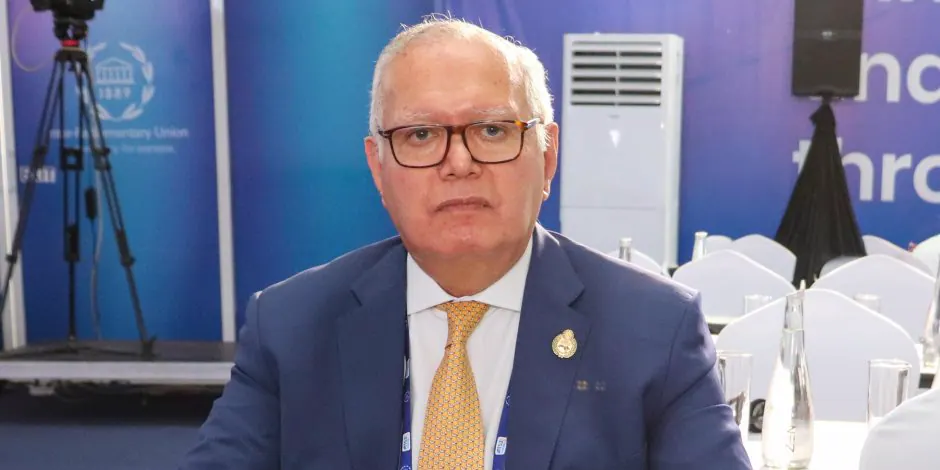
Egyptian diplomat Ambassador Mohamed El-Arabi has stressed the significance of parliamentary diplomacy as a complementary path to traditional diplomacy. He noted that it serves as a safety net and a crucial factor in fostering relationships between nations, particularly on a bilateral level. El-Arabi made these remarks during a discussion on the future of parliamentary diplomacy at the 153rd General Assembly of the Inter-Parliamentary Union in Arusha, Tanzania.
El-Arabi, a member of the Arab Parliament, highlighted his extensive experience in traditional diplomacy spanning over four decades and his involvement in parliamentary diplomacy since 2015. He emphasized the necessity of integrating the roles of both types of diplomacy. According to El-Arabi, the current global landscape is characterized by the dominance of "might over right," and the United Nations is facing challenges in fulfilling its role.
The diplomat pointed out that in the face of the UN's declining capacity to exert its influence, parliamentary diplomacy emerges as a vital voice reflecting the aspirations of peoples. He suggested that it can operate in tandem with the UN, contributing to the revitalization of its role and regaining the momentum needed in the coming phase. El-Arabi's insights underscore the evolving nature of international relations and the increasing importance of parliamentary diplomacy.
The discussion on parliamentary diplomacy's future took place within the context of the Inter-Parliamentary Union's General Assembly, a global event that brings together parliamentarians to address pressing international issues. El-Arabi's participation, representing the Arab Parliament, highlights the organization's engagement with broader international diplomatic efforts and its commitment to enhancing cooperation among nations.
El-Arabi's emphasis on parliamentary diplomacy's role in echoing the conscience of the world aligns with the broader objectives of the Inter-Parliamentary Union. The organization seeks to promote peace, democracy, and development through parliamentary cooperation. By advocating for a stronger parliamentary diplomacy, El-Arabi and like-minded individuals aim to ensure that the voices of people are represented in international forums.
The event in Arusha, Tanzania, provided a platform for El-Arabi to share his perspectives with a global audience of parliamentarians. His experience and insights contribute to the ongoing discourse on how parliamentary diplomacy can be leveraged to address contemporary challenges. As global politics continue to evolve, the role of parliamentary diplomacy is likely to gain further attention.
In conclusion, Ambassador Mohamed El-Arabi's call for a more prominent role for parliamentary diplomacy reflects a broader recognition of its potential to complement traditional diplomatic efforts. As the international community navigates complex challenges, the integration of parliamentary voices in diplomatic processes may offer new avenues for addressing global issues.
Key points
- Parliamentary diplomacy can operate in tandem with the UN to support its role and regain momentum.
- The current global landscape is characterized by the dominance of "might over right," and the UN is facing challenges in fulfilling its role.
- El-Arabi has extensive experience in traditional diplomacy and parliamentary diplomacy, emphasizing the necessity of integrating their roles.