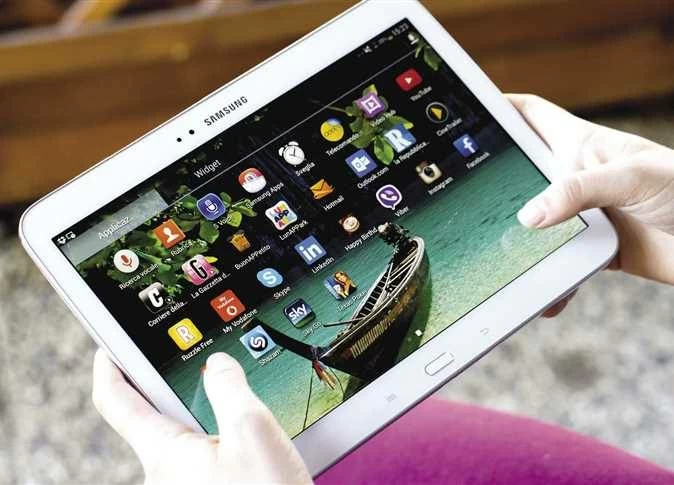
The case, which drew significant public attention, began with a report from the Ministry of Education's financial and technological development departments about a sudden and substantial shortage of 1,179 educational tablets intended for high school students. The tablets were stored in a warehouse within the 6th of October City educational hub. Investigations by the Public Prosecution revealed that the theft occurred over several days in September 2024.
According to the investigations, the theft was uncovered when a supply company visited the warehouse to collect items. Upon opening the storage room, officials noticed an open box from which two cartons were missing, along with another open carton missing seven devices. Further inspection, supported by the supply company's manager, Ayman Jaber, revealed that a total of 1,179 tablets were missing.
In an undercover operation, Ministry officials posed as regular customers looking to buy tablets for a family member. They visited a local shop in the Abdel Aziz street in Muski, where they were asked if they wanted the tablets locked and programmed on the Ministry's system or unlocked and outside the educational system. The officials managed to purchase two devices in their original packaging, which were later verified through the supplier's database to match the stolen Ministry tablets.
The investigation, which included surveillance and technical analysis, identified a network of individuals involved in the theft and distribution of the stolen tablets. The main suspect, Mahmoud M. A, utilized his access to the educational city's warehouses to steal the devices in batches and transport them outside using rental cars. He collaborated with Rafeat S. F, known as "Bandoq," who sold the devices at significantly reduced prices due to his experience in the mobile phone trade.
The distribution network involved several intermediaries and traders, including Ahmed C, known as "Galaxy," and Hitham F. The devices eventually reached Kirels H, a partner and manager of a popular retail chain. Investigations showed that Kirels kept 500 of the stolen tablets for himself and sold them through his stores across Egypt, often at a discounted price of 4,250 Egyptian pounds per device, in violation of consumer protection laws.
The trial and subsequent investigations led to the arrest of several individuals involved, including Mohamed S. S, a ride-hailing driver who claimed he was unaware that his trips with Mahmoud were related to theft or embezzlement. Authorities managed to recover approximately 750 stolen devices and seized 1.680 million Egyptian pounds, representing the proceeds from the sale of some of the stolen goods.
The case concluded with a final court judgment upholding a 10-year prison sentence for Kirels H. The efforts of the security agencies and regulatory bodies were crucial in uncovering the extensive network involved in the theft and resale of the educational tablets meant for public schools.
Key points
- The theft involved 1,179 educational tablets from Ministry of Education warehouses.
- The main perpetrator, Kirels H, was sentenced to 10 years in prison.
- Authorities recovered about 750 stolen devices and seized 1.680 million Egyptian pounds from the sale of the stolen goods.