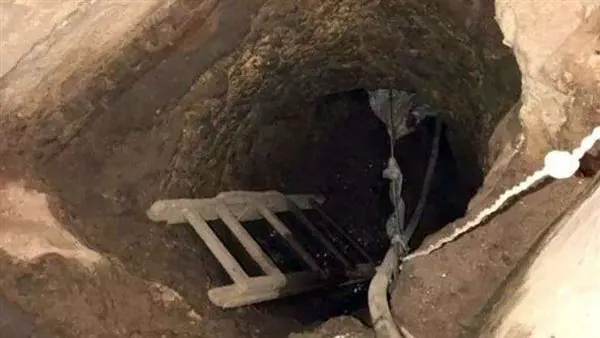
The Cairo Criminal Court has sentenced four unemployed men to five years in prison for their involvement in an organized crime ring that attempted to excavate and traffic antiquities in the Gamaliya district. According to the court's ruling, the defendants had agreed to carry out the illicit activities and used a property in the district as their base of operations. The court found that they had conducted unauthorized excavations, using necessary tools and equipment, with the intention of discovering and profiting from antiquities.
The defendants, whose identities have not been disclosed, were arrested by Cairo's security forces after authorities received information about their activities. The forces raided the site and caught the men in the act of excavating. Seized from them were various tools used for digging. When questioned, the defendants confessed to their crimes, as documented in the investigations. The case highlights the ongoing efforts of Egyptian authorities to combat the illicit trade in antiquities.
The court's decision was based on evidence gathered from the crime scene, investigative reports, and witness statements. A committee of experts on antiquities was formed to assess the nature of the excavations and their connection to the crime of searching for and excavating antiquities. The committee's report confirmed that the defendants' actions were indeed aimed at uncovering antiquities in contravention of the law.
According to Egyptian law, the crime of antiquities trafficking does not require the actual discovery of an antiquity; the act of excavating with the intent to search for antiquities is sufficient to constitute a crime. This ruling underscores the country's commitment to protecting its cultural heritage and enforcing laws against those who would seek to exploit it for personal gain.
The case began when Cairo's security forces received a tip about a group of four unemployed men conducting unauthorized excavations in a property in the Gamaliya district. Following a surveillance operation, authorities apprehended the suspects and seized equipment used for digging. The swift action by the authorities prevented potential damage to historical sites and thwarted the defendants' plans to traffic antiquities.
The defendants' actions, as established by the court, included conducting excavations without permission, using various tools and equipment. Their goal was to find and profit from antiquities, activities that are strictly regulated by Egyptian law. The court's sentence reflects the seriousness with which Egypt views crimes related to the trafficking of antiquities and its determination to prosecute those involved.
The ruling has been welcomed by those who advocate for the preservation of Egypt's rich cultural heritage. It serves as a deterrent to others who might consider engaging in similar illicit activities. Egyptian authorities continue to work to protect the country's historical sites and artifacts from those who would seek to exploit them.
Key points
- Four men were sentenced to five years in prison for unauthorized excavation and trafficking of antiquities in Cairo's Gamaliya district.
- The court's decision was based on evidence gathered from the crime scene, investigative reports, and witness statements.
- Egyptian law considers the act of excavating with the intent to search for antiquities a crime, regardless of whether an antiquity is actually discovered.