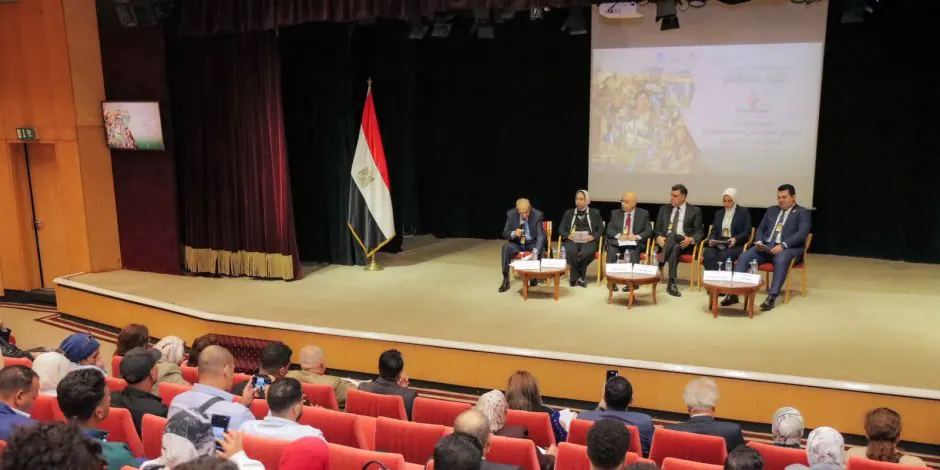
A session titled "Identity in the Digital Age: Artificial Intelligence and Social Media" was held as part of the "National Identity: Rooted and Renewed" conference in Alexandria, Egypt. The event, held under the auspices of President Abdel Fattah El-Sisi, brought together experts to discuss the intersection of technology and national identity. The session was moderated by Dr. Marwa El-Wakeel, head of the Academic Research Sector at the Bibliotheca Alexandrina.
Dr. El-Wakeel emphasized that discussions about modern technology must consider both opportunities and challenges. She noted that technology has become an integral part of modern life, shaping the awareness of new generations. Social media platforms and AI tools offer opportunities for redefining national identity, but also pose significant challenges. Dr. El-Wakeel called for a language that resonates with younger generations, for whom AI is an essential part of their identity and culture.
Dr. Mohamed Salem, former Minister of Communications and Information Technology, discussed the relationship between national identity and AI in the digital age. He highlighted the global debate on AI's implications and the importance of digital sovereignty, which consists of seven key elements. Dr. Salem stressed the need for Arab countries to develop independent AI models to control this technology, citing ongoing efforts in Egypt and other Arab states.
Major General Dr. Hesham El-Halaby, a military strategist, emphasized that Egyptian national identity has endured throughout history. He warned that the digital age poses risks to national identity, as online spaces can erode identity over time. Dr. El-Halaby advocated for producing attractive national content and linking national identity to scientific achievements, with youth playing a crucial role in this endeavor.
Dr. Yasser Abdel Aziz, a media expert, noted that defining national identity is complex and context-dependent. He argued that power dynamics shape the elements of national identity and that social media is an unstoppable force. Dr. Abdel Aziz called for producing content that reflects Egyptian values and for continued awareness-raising about the risks associated with modern technology.
Reham Salah Khafaji, a researcher at the Bibliotheca Alexandrina's Strategic Studies Center, linked youth empowerment to national identity. She emphasized that national identity is a dynamic concept influenced by various factors, including technology. Khafaji advocated for equipping youth with digital literacy, enabling them to become producers rather than just consumers of technology.
Mohamed Kamel, from the Ministry of Youth and Sports, discussed government initiatives to provide digital services to young people, such as the Egypt Digital platform. He highlighted programs aimed at promoting digital awareness and cautioning youth about online risks. Kamel warned about the "information gap" and stressed the importance of targeted communication in making the internet accessible to all, particularly in rural areas.
Key points
- The conference emphasized the need for Egypt to develop its own AI models to control the technology and protect national identity.
- Experts stressed the importance of youth empowerment and digital literacy in shaping national identity in the digital age.
- The session highlighted the challenges posed by social media and AI to national identity, including the spread of misinformation and the erosion of traditional identity.