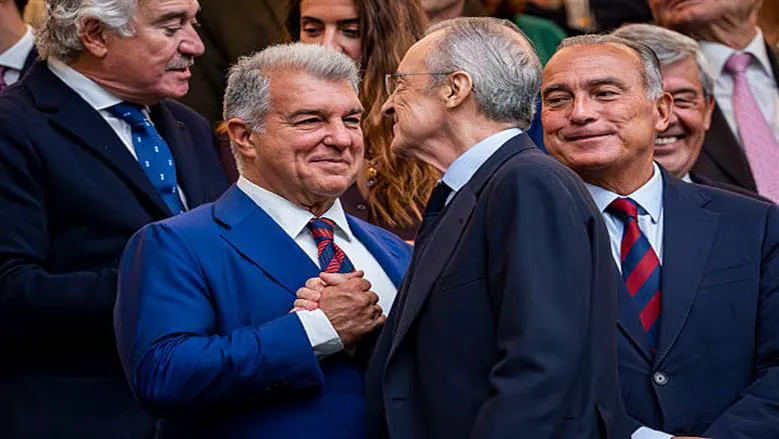
A recent decision by FIFA to merge two consecutive international breaks into a single, three-week-long camp has stirred significant controversy within European football circles. This move has been met with strong opposition from prominent clubs such as Spain's Barcelona and Real Madrid, citing concerns over player fatigue and the disruption of domestic league schedules. According to reports from the Spanish sports newspaper Sport, the new policy could have a detrimental impact on the rhythm of local competitions and threaten player safety.
Barcelona's president, Joan Laporta, has publicly criticized the decision, arguing that it lacks sound sporting logic and disrupts the team's technical planning at a crucial point in the season. This stance is supported by the club's German manager, who has expressed ongoing concerns about player exhaustion due to lengthy international travels. Real Madrid has also joined in the criticism, highlighting the strain caused by the prolonged absence of key players and the tiring travel schedules involved in international competitions.
The opposition to FIFA's policy is not limited to Spanish clubs. The technical staff of the Spanish national team has also voiced its disapproval, citing concerns over player health and the compressed schedule of matches. The team's coach emphasized that the previous format allowed for more substantial rest periods between fixtures compared to the current setup, which involves extensive travel.
Reactions from other major European leagues have been mixed. While some have adopted a cautious approach, waiting to assess the impact of the new policy, others have expressed outright criticism. The manager of Arsenal has opted for enhanced communication with national associations and coaches to ensure player safety, whereas the manager of Manchester City has taken a lighter approach, using the break to review team performance.
Not all European clubs are opposed to the change. Paris Saint-Germain seems to have accepted the new reality, while Bayern Munich is cautiously awaiting the return of its players without injuries to maintain its strong competitive chances. The varied responses highlight the complexity of the issue and the challenges of implementing a one-size-fits-all policy across different leagues and countries.
The debate over FIFA's international break policy underscores the ongoing challenges of balancing club and international football commitments. With player welfare and competitive integrity at stake, finding a solution that satisfies all stakeholders remains a significant task for football's governing bodies. The discussions are likely to continue as the season progresses and the effects of the new policy become more apparent.
As the football community continues to grapple with the implications of FIFA's decision, clubs and national teams will need to adapt to the new schedule. Monitoring the impact on player fitness, team performance, and fan engagement will be crucial in assessing the success of the policy and determining whether adjustments are needed in the future.
Key points
- Barcelona and Real Madrid lead opposition to FIFA's merged international break policy
- Concerns over player fatigue and domestic league disruption drive criticism
- Mixed reactions from European clubs and national teams highlight challenges of implementation