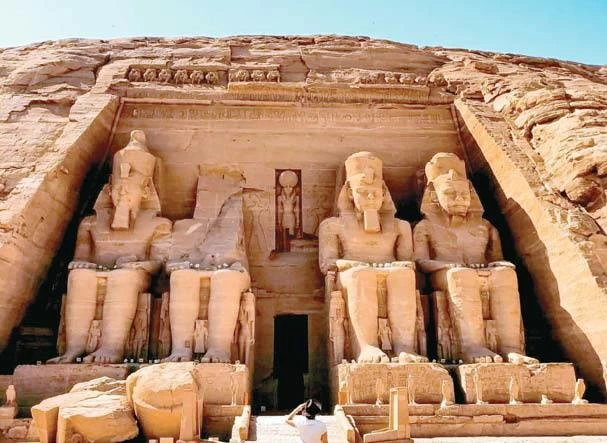
A large number of bats have been spotted inside the Abu Simbel temple in southern Aswan, Egypt, causing concern among tourists and prompting the Supreme Council of Antiquities to intervene. The bats have made their home in the high ceilings of the temple's internal halls, sparking fears about the impact on the historical site and the experience of visitors.
According to a memo sent by the Abu Simbel antiquities inspection team, the bats have been attracted to the temple's cave-like environment, leading to a buildup of their droppings on the floors and walls. The presence of the bats has also caused alarm and discomfort among tourists during their visits. Despite some limited attempts to address the issue, including using lighting and manual removal, the bats have continued to return to their roosts in the temple's rocky crevices.
The Abu Simbel inspection team has requested that the issue be referred to the Supreme Council of Antiquities' pest control unit for further study and action. They have suggested using ultrasonic repellent devices to deter the bats without harming them or damaging the temple's ancient carvings. The devices would be installed in a way that ensures their effectiveness while preserving the site's integrity and safety for visitors.
In response to the situation, a spokesperson for the Supreme Council of Antiquities confirmed that the issue is being addressed and that specialists will be visiting the site to take necessary measures. The council has previously dealt with similar problems at other archaeological sites, including a rodent infestation at Qaitbay Citadel.
The Supreme Council of Antiquities has reportedly been seeking to acquire ultrasonic repellent devices to address the issue. The devices are expected to provide a humane and effective solution to the bat infestation, allowing visitors to enjoy the temple while preserving its historical significance.
The Abu Simbel temple, one of Egypt's most famous tourist attractions, was built in the 13th century BC and features colossal statues of Pharaoh Ramses II. The site was relocated in the 1960s to avoid being submerged by Lake Nasser, a massive hydroelectric dam project.
The Egyptian government has taken steps to protect the temple and other historical sites from various threats, including environmental damage and tourism-related wear and tear. The current effort to address the bat infestation is part of these ongoing conservation efforts.
Key points
- Egyptian authorities are working to address a bat infestation at the Abu Simbel temple in Aswan.
- The bats have caused concern among tourists and raised fears about the impact on the historical site.
- The Supreme Council of Antiquities is using ultrasonic repellent devices to deter the bats.