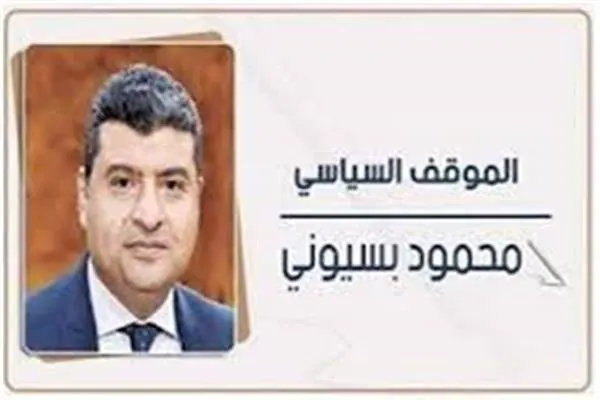
Egyptian author Mahmoud Bسيوني has written an article commemorating the upcoming anniversary of the 1973 Arab-Israeli War, focusing on the legacy of President Anwar El-Sadat. El-Sadat's presidency, which began after the death of Gamal Abdel Nasser in 1970, was marked by significant challenges, including occupied land, a rebuilding military, and a struggling economy. Bسيوني describes El-Sadat as an exceptional figure in Egyptian history, whose story warrants examination and debate.
El-Sadat's leadership during the 1973 war is a subject of great interest, particularly in light of recent anniversaries and the use of artificial intelligence to recreate historical events. Bسيوني notes that El-Sadat's ability to lead Egypt to victory against Israel, despite unfavorable odds, was remarkable. The Egyptian military's success was largely due to El-Sadat's strategic decision to rely on the determination of the Egyptian people and military.
According to Bسيوني, El-Sadat's greatest achievement was his ability to transform the military's momentum into a lasting peace. After the war, El-Sadat pursued a peace treaty with Israel, a move that was met with resistance from many Arab states and Egyptian citizens. Bسيوني describes El-Sadat's visit to Israel as a bold and historic move that caught the Israeli government off guard and paved the way for Egypt's recovery of its occupied territories.
Henry Kissinger, the former US National Security Adviser, praised El-Sadat's leadership, describing him as a statesman who could read the balance of power and extract the maximum benefit from any situation. Bسيوني notes that El-Sadat's approach to politics was characterized by pragmatism and a focus on achieving tangible results, rather than simply following popular sentiment.
In his article, Bسيوني also reflects on the current state of the region and the relevance of El-Sadat's legacy. He quotes El-Sadat's 1973 speech to the Egyptian parliament, in which he emphasized the importance of turning aspirations into action and achieving concrete results. Bسيوني suggests that El-Sadat's approach remains a valuable lesson for leaders today.
The article also touches on the controversy surrounding El-Sadat's legacy, with some critics accusing him of being too willing to compromise with Israel. However, Bسيوني argues that El-Sadat's decisions were guided by a desire to achieve a lasting peace and secure Egypt's interests. He notes that, despite the challenges and criticisms, El-Sadat's legacy has been vindicated by history.
Ultimately, Bسيوني presents El-Sadat as a complex and multifaceted figure, whose leadership and decision-making continue to inspire debate and reflection. He concludes that El-Sadat's story offers valuable lessons for leaders and citizens alike, particularly in the context of Egypt's ongoing development and growth.
Key points
- El-Sadat's leadership during the 1973 war and his pursuit of a peace treaty with Israel remain significant aspects of his legacy.
- Bسيوني's article highlights the relevance of El-Sadat's approach to politics and leadership in the current regional context.
- The author presents El-Sadat as a pragmatic leader who prioritized achieving tangible results and securing Egypt's interests.