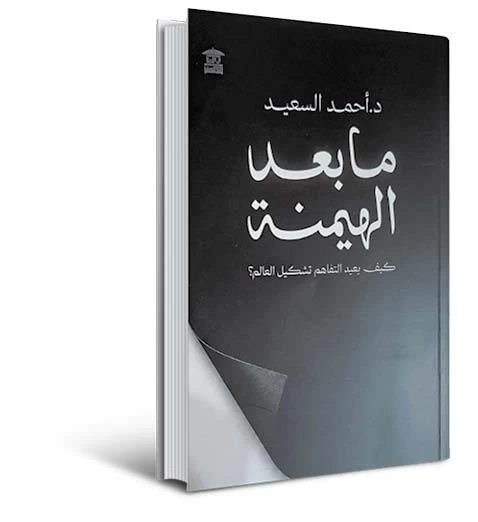
Dr. Ahmed Saeed, an Egyptian thinker, translator, and publisher, has recently released a book titled "After Hegemony: How Does Understanding Reshape the World?". The book presents an Arab perspective on development and international relations, drawing inspiration from China's developmental experience. Saeed argues that understanding between civilizations and nations is crucial for achieving sustainable development.
The book is divided into three parts, exploring the limitations of dominant narratives in modern history, the cultural and theoretical foundations of Sino-Arab relations, and the practical applications of a new approach to international relations. Saeed critiques three dominant narratives: the linear modernization narrative, the clash of civilizations theory, and the digital globalization narrative. He contends that these narratives have contributed to a lack of understanding in today's information-rich world.
Saeed's work is informed by his extensive experience living and working in China, as well as his previous research on Chinese culture and politics. His earlier book, "China from Within: The Culture of Chinese Political Thought from Confucius to Xi Jinping", was based on his 25-year engagement with China. Saeed's current book seeks to promote a deeper understanding of China and its relations with the Arab world.
The author proposes a new approach, which he calls "development through understanding". This approach emphasizes the importance of mutual understanding between nations and civilizations, rather than relying solely on economic or military power. Saeed argues that understanding can become a key component of development, enabling nations to work together more effectively.
Saeed's book also explores the historical and cultural context of Sino-Arab relations, highlighting the potential for greater cooperation and understanding between the two regions. He draws on Islamic and Chinese philosophical traditions, as well as Egypt's own experiences with cultural exchange and diplomacy. The author suggests that a new model of Sino-Arab relations can be built on mutual understanding and respect.
To promote this new approach, Saeed proposes the establishment of a new center for Sino-Arab studies and translation. The center would aim to promote cultural exchange, support research and education, and facilitate dialogue between scholars and policymakers from China and the Arab world. Saeed also suggests launching a program for translating Arabic books into Chinese and vice versa.
The author emphasizes the need for sustained investment in people-to-people diplomacy and cultural exchange, rather than relying on short-term projects or individual initiatives. Saeed's work offers a fresh perspective on global relations and development, highlighting the importance of understanding and cooperation in an increasingly complex world.
Key points
- Dr. Ahmed Saeed's book "After Hegemony" presents a new approach to international relations, emphasizing the importance of mutual understanding between nations and civilizations.
- The book explores the limitations of dominant narratives in modern history and proposes a new model of Sino-Arab relations based on mutual understanding and respect.
- Saeed suggests establishing a new center for Sino-Arab studies and translation to promote cultural exchange and support research and education.