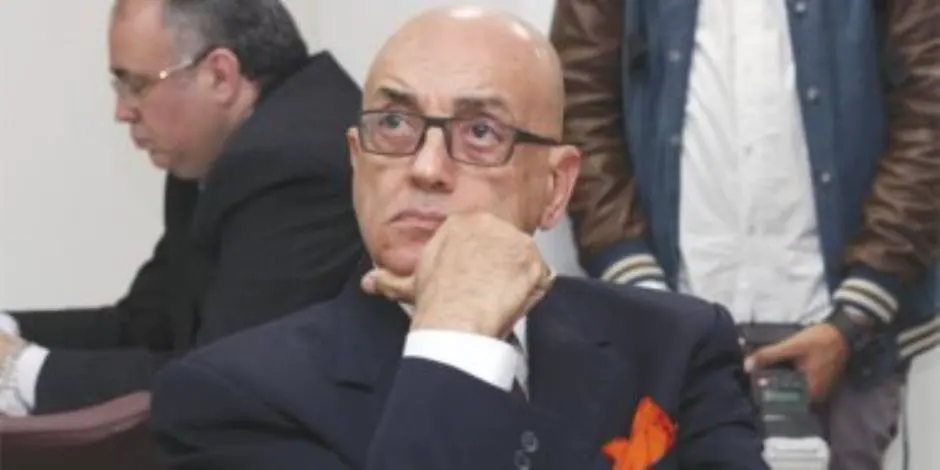
Renowned Egyptian writer Mohamed Salama recently delivered a speech at the National Identity Conference held at the Bibliotheca Alexandrina, emphasizing the significance of preserving national identity in today's rapidly changing world. He stressed that building a cultural discourse capable of keeping pace with the transformations of the era and reaching new generations is crucial. Salama highlighted that national identity is not solely based on the past, but also on a society's ability to evolve and open up to the world while maintaining its cultural specificity and historical memory.
During his speech, Salama discussed the role of culture in shaping awareness and promoting belonging, as well as the relationship between Egyptian identity and its diverse cultural influences. He underscored that national identity encompasses not only symbols and slogans but also language, literature, arts, collective memory, and shared values. A society confident in its identity is more capable of engaging in dialogue with others, Salama noted, adding that protecting identity requires consolidating values of diversity, respect for differences, and confronting intolerance, hatred, and exclusion.
Salama called for a new cultural discourse that connects the past with the future and allows new generations to participate in shaping their identity. He emphasized that culture is a shared responsibility among the state, society, educational institutions, media, intellectuals, and creators. The importance of culture in building human beings and preserving the nation necessitates the transition of ideas from conferences to the public sphere, Salama said.
The writer highlighted that the current era, with its rapid flow of information and ideas, poses significant challenges to cultural discourse. He noted that traditional sources of cultural formation, such as schools, books, and newspapers, are no longer the sole influencers of human awareness. The rise of digital platforms, social media, and artificial intelligence has transformed the way people consume and interact with culture, Salama observed.
Salama stressed that the real battle is not between modern and traditional culture but between living culture capable of renewal and stagnant culture that has become mere memorization. He advocated for a cultural discourse that is not afraid of questions, critical thinking, or innovation. Such a discourse should tell young Egyptians that their history is not a prison, their culture is not a limitation, and their identity is not fixed but evolving.
The author also emphasized the importance of language in shaping national identity and culture. He argued that the Arabic language is not just a tool for communication but a fundamental vessel for the region's memory and a central means of sustaining its culture. Salama called for developing the use of Arabic in education, media, culture, and technology to make it capable of expressing the new world.
Salama concluded that the issue of cultural discourse should not be confined to intellectuals alone but rather be a concern for the state, society, schools, universities, media, artists, writers, and publishers. The question, he said, is not what we write or produce in art but what kind of human being we want to create. The answers to these questions make culture an integral part of a broader national project.
Key points
- Mohamed Salama stresses the need for a new cultural discourse that connects the past with the future and allows new generations to participate in shaping their identity.
- Salama emphasizes that national identity encompasses not only symbols and slogans but also language, literature, arts, collective memory, and shared values.
- The writer calls for developing the use of Arabic in education, media, culture, and technology to make it capable of expressing the new world.