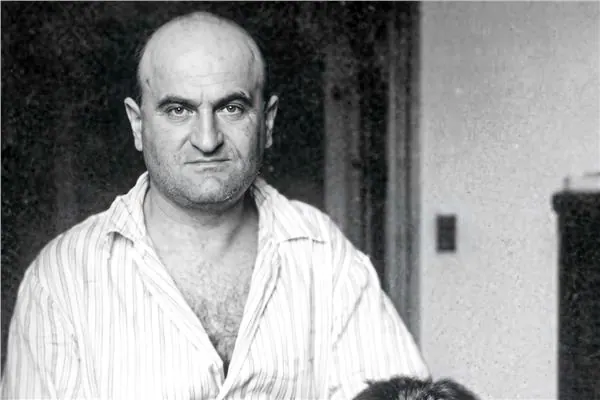
Alexander Saroukhan, an Armenian-born Egyptian artist, left an indelible mark on Egyptian art, particularly in cartoons and caricatures. Born on October 1, 1898, in the small town of Ardhanosh, near Batumi, in the Russian Empire, Saroukhan moved to Istanbul with his family in 1909. His early life was marked by turmoil, with his family relocating to Batumi in 1912, only to be separated by the Armenian Genocide and World War I.
Saroukhan's journey to Egypt began in 1924 when he arrived in Alexandria with over 125 drawings, having been invited by Egyptian writer Abdel Qader Al-Shanawi to contribute to a satirical magazine. Initially, he worked as a drawing teacher at the Armenian school in Cairo and later became a prominent cartoonist for several Egyptian publications, including "Rose al-Yusuf" and "Akharat al-Saa".
A turning point in Saroukhan's career came in 1928 when his drawing topped the cover of "Rose al-Yusuf" magazine, marking the beginning of his successful career in Egyptian caricature. His collaboration with writer Mohamed El-Tabei led to the creation of the iconic character "Al-Masri Afandi," which became a symbol of Egyptian common sense and humor.
Saroukhan's artwork not only showcased his artistic prowess but also reflected his deep connection to Egypt. Despite being of Armenian descent, he considered Egypt his home and was granted Egyptian citizenship. His cartoons often tackled sensitive topics, including politics and social issues, earning him recognition as a pioneer of Egyptian caricature.
In the context of the October War, Saroukhan created a series of cartoons that captured the essence of Egypt's victory. One notable work features a train with "6 October" emblazoned on its front, crushing Israeli dreams, represented by a table with the inscription "Israeli Dreams" being pushed aside. These cartoons not only showcased Saroukhan's wit and satire but also served as a testament to Egypt's resilience and determination.
Saroukhan's artwork continued to inspire generations of artists and cartoonists. His legacy was celebrated in 2019 at the Bibliotheca Alexandrina, where he was hailed as the founder of Egyptian caricature. His contributions to Egyptian art, particularly in the realm of cartoons and caricatures, remain unparalleled.
Throughout his career, Saroukhan produced over 20,000 cartoons, leaving behind a treasure trove of artistic expression. His final work, created on December 31, 1976, was published in "Akharat al-Saa" on January 1, 1977, the same day he passed away. Saroukhan's remarkable journey serves as a testament to the power of art to transcend borders and cultures.
Key points
- Alexander Saroukhan's cartoons commemorating the October War reflect his deep connection to Egypt and his role as a pioneer of Egyptian caricature.
- Saroukhan's artwork tackled sensitive topics, including politics and social issues, earning him recognition as a prominent Egyptian artist.
- His legacy continues to inspire generations of artists and cartoonists, solidifying his place as a founder of Egyptian caricature.