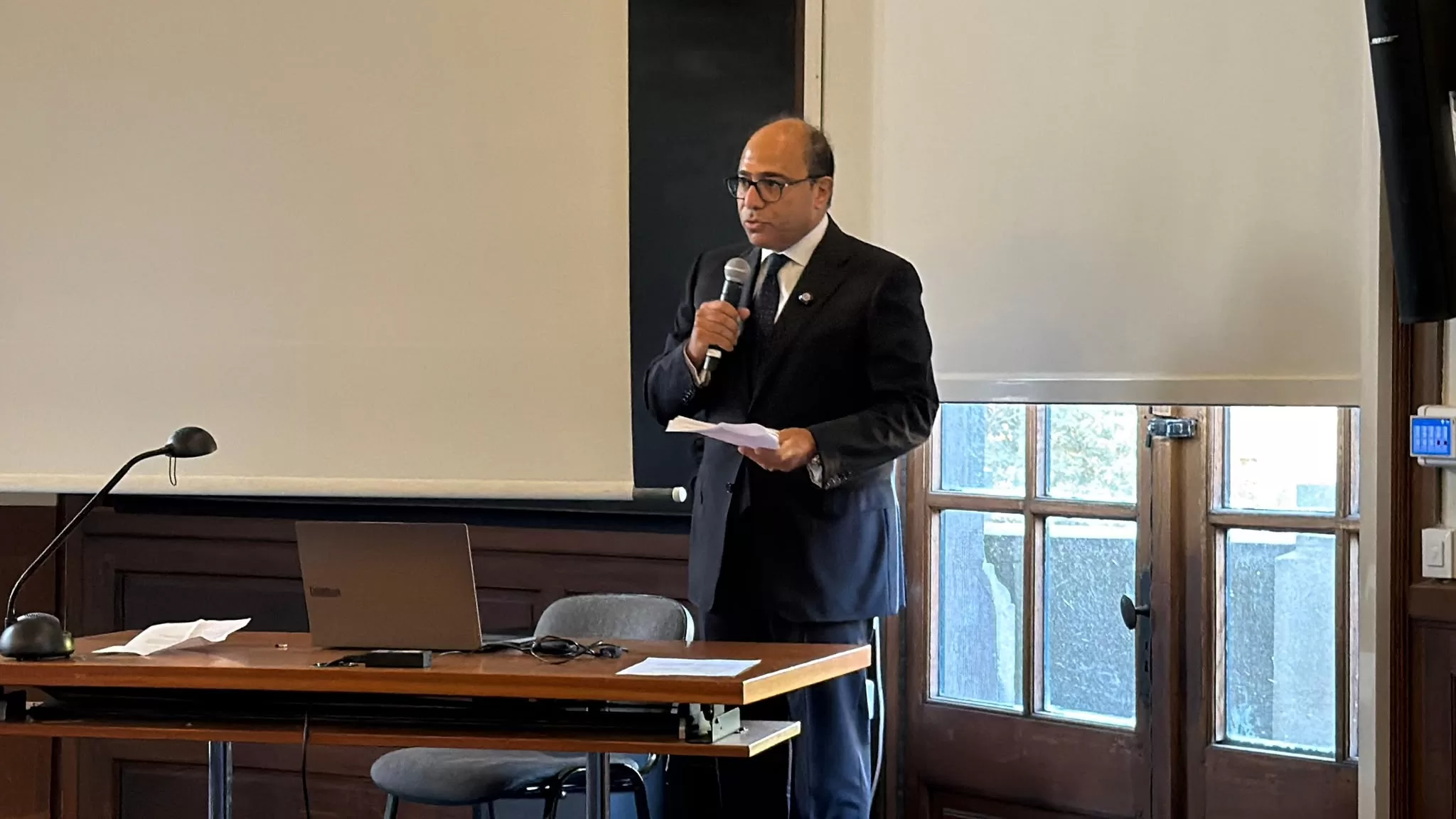
Egyptian Ambassador to Belgium, the European Union, Luxembourg, and NATO, Ahmed Abu Zeid, inaugurated the Belgian Egyptology conference, organized by the Queen Elisabeth Association for Egyptology, on September 25-26. The event took place at the Royal Museum of Art and Military History in Brussels, under the auspices and support of the Egyptian Embassy. In his opening speech, Abu Zeid expressed appreciation for the association's role in promoting studies and research on ancient Egyptian civilization.
The ambassador acknowledged the association's founder, the renowned Belgian Egyptologist Jean Capart, and emphasized the conference's significance as a scientific and cultural platform. The event brings together a selection of Egyptologists, researchers, and specialists, providing an opportunity to present recent research projects on various aspects of ancient Egyptian history. This initiative aims to enhance global awareness of Egypt's rich heritage as a fundamental component of human legacy.
Abu Zeid highlighted the depth and diversity of the Belgian school of Egyptology, reflected in the conference's varied themes. These include studying the original sculptural program of the lower temple of King Khafre in the Giza pyramids, archaeological research at the Dendera site in Upper Egypt, and ongoing epigraphic work at the Horus and Sobek temple in Kom Ombo. The conference also features recent scientific studies on the restoration and analysis of several artifacts in different locations.
The Egyptian Embassy's support for the conference stems from its conviction in the importance of cultural and scientific diplomacy as effective bridges between nations. The embassy seeks to foster academic and research cooperation between Egyptian and Belgian institutions. On the sidelines of the event, the Egyptian Embassy hosted a reception for participants, researchers, and invitees from academic circles and those interested in Egyptian history in Belgium.
The reception aimed to emphasize Egypt's ongoing support for scientific research and cultural cooperation, as well as to encourage initiatives that promote knowledge of Egyptian civilization globally. The Belgian Egyptology conference represents a significant step in strengthening ties between Egypt and Belgium in the fields of archaeology, history, and scientific research.
The conference program includes various sessions and lectures by distinguished scholars, covering a range of topics related to Egyptology. These discussions are expected to contribute to a deeper understanding of ancient Egyptian history and culture. The event also provides a platform for networking and exchanging ideas among experts and enthusiasts.
The Egyptian ambassador's participation in the conference underscores Egypt's commitment to cultural diplomacy and its role in promoting scientific cooperation with other countries. The event is a testament to the strong relations between Egypt and Belgium, and it is expected to have a positive impact on future collaborations between the two nations in the fields of archaeology, history, and scientific research.
Key points
- The conference highlights Egypt's rich cultural heritage and its significance in the global scientific community.