A prominent Egyptian agriculture professor, Nader Nur El-Din, has raised concerns about the environmental and climatic impacts of cutting down trees in urban areas. As an expert in water resources and agriculture at Cairo University, Nur El-Din emphasized that urban trees provide numerous benefits, including reducing temperatures, providing shade, and improving air quality. He also highlighted their role in absorbing carbon dioxide and producing oxygen.
According to Nur El-Din, urban trees can lower temperatures by 4-8 degrees Celsius, creating shaded areas for citizens and preventing the rise of metal surface temperatures. He stressed that trees play a vital role in mitigating the urban heat island effect. Additionally, trees act as natural lungs, absorbing carbon dioxide and producing oxygen, essential for human and animal life.
Nur El-Din pointed out that Western countries have developed specialized machinery to preserve trees during urban development projects. These machines enable the temporary relocation of trees, along with their roots and surrounding soil, to alternative locations or temporary desert farms. This approach allows for the preservation of mature trees, which can be replanted once the development is complete.
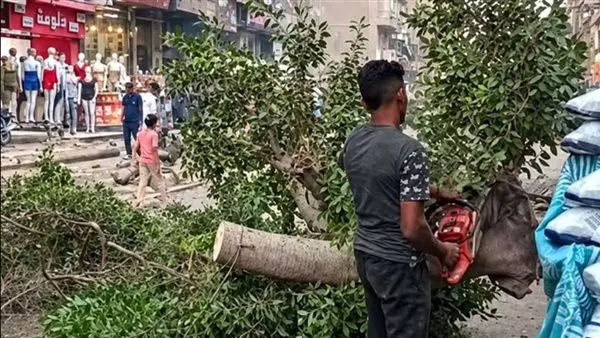
The professor emphasized that using such machinery is crucial for maintaining Egypt's urban tree wealth. He warned that simply cutting down trees for limited financial gains results in irreparable losses. Nur El-Din argued that replanting small seedlings cannot compensate for the loss of mature trees, which take decades to grow and provide similar benefits.
Nur El-Din stressed that Egypt urgently needs this type of machinery, given the significant number of trees recently cut down. He highlighted the importance of preserving trees in Egypt's hot desert climate, not only for their environmental benefits but also for their aesthetic value. Trees contribute to the beauty of urban landscapes with their greenery and flowers.
The professor called for a more sustainable approach to urban development, one that balances human needs with environmental concerns. He advocated for the protection of trees as a natural resource, rather than viewing them as obstacles to be removed. By adopting this approach, Egypt can mitigate the effects of climate change and create more livable cities.
Nur El-Din's warnings come as Egypt continues to grapple with the challenges of climate change, including rising temperatures and changing weather patterns. His advocacy for tree preservation and sustainable urban development highlights the need for a comprehensive approach to addressing these issues. By working together, Egypt can create a more sustainable and environmentally conscious future.
Key points
- Egypt needs specialized machinery to preserve and relocate mature trees during urban development projects.
- Urban trees provide numerous environmental benefits, including reducing temperatures and improving air quality.
- Preserving mature trees is essential for maintaining urban biodiversity and mitigating the effects of climate change.