Egyptian Agriculture Minister Alaa Farouk stated that climate change poses a significant challenge to the agricultural sector. To address this issue, the ministry adopts a comprehensive approach that includes monitoring, early prediction, and the development of climate-resilient crop varieties. This approach also involves the implementation of modern agricultural practices and climate-smart agriculture. The minister made these remarks at the Sahara International Agricultural Exhibition, currently underway in Egypt.
The Climate Change and Renewable Energy Information Center, affiliated with the Agricultural Research Center, plays a crucial role in monitoring and analyzing climate variables. The center operates an early warning system, issuing recommendations to farmers before and during extreme weather events. This enables them to protect their crops and minimize losses. According to Minister Farouk, addressing climate change relies on three main pillars: early warning systems, the development of resilient crop varieties, and the expansion of climate-smart agriculture.
Minister Farouk emphasized that the Egyptian government considers the private sector a key partner in developing the agricultural sector and achieving the goals of Egypt's 2030 vision. He encouraged the private sector to invest in agricultural production, processing, and technology, as well as modern irrigation systems. The minister stressed the need for increased investment in the agricultural sector, improved resource management, and the adoption of modern technology to enhance efficiency.
The minister highlighted the significance of the private sector's role in enhancing the competitiveness of Egyptian agricultural products. This can be achieved through improved quality, packaging, processing, storage, and transportation. Additionally, linking production to local and export markets, and expanding high-value crops, can contribute to increased agricultural exports. The Sahara exhibition provides a vital platform for connecting the government, farmers, and companies to convert presented solutions into practical projects.
Minister Farouk noted that the exhibition offers opportunities for investors and companies to explore the potential of Egypt's agricultural sector. The sector provides numerous investment opportunities in areas such as production, processing, modern irrigation, agricultural technology, logistics, marketing, and exports. He emphasized that achieving agricultural development requires a genuine partnership between the government, private sector, and farmers.
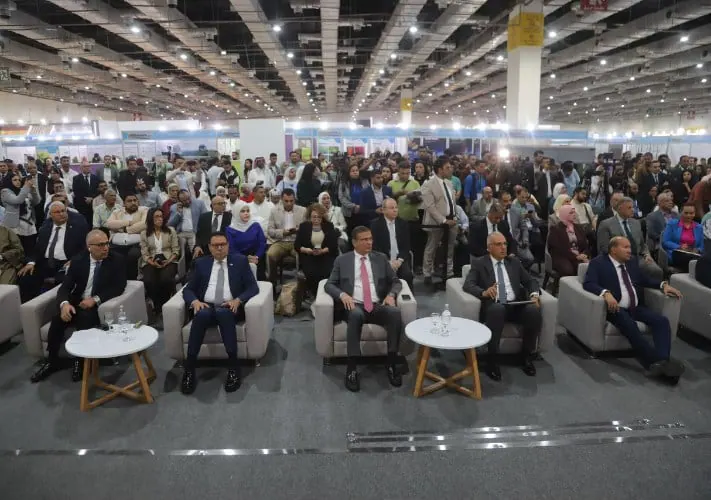
The minister stressed that the future of agriculture in Egypt depends on the integration of efforts between the government, farmers, private sector, and scientific research. He emphasized that achieving food and water security is a shared responsibility. The Sahara International Agricultural Exhibition, now in its 38th edition, has attracted around 550 companies and brands from 30 countries.
The exhibition was inaugurated by Minister Alaa Farouk on behalf of Prime Minister Mostafa Madbouli, in the presence of Water Resources and Irrigation Minister Hani Sweilem and other officials. The event aims to promote innovative solutions and partnerships that can contribute to the development of Egypt's agricultural sector.
Key points
- The Egyptian government adopts a comprehensive approach to addressing climate change in the agricultural sector.
- The private sector plays a crucial role in developing the agricultural sector and achieving Egypt's 2030 vision.
- The Sahara International Agricultural Exhibition provides a platform for promoting investment and innovation in the agricultural sector.