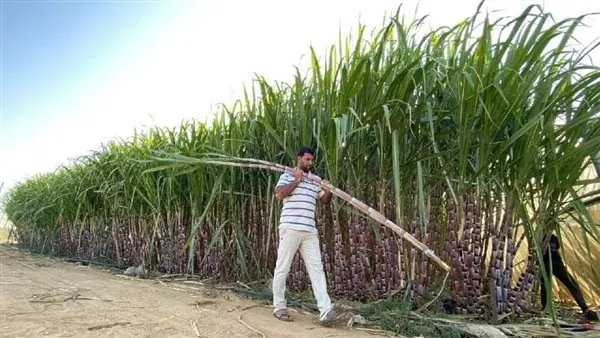
A significant decline in sugarcane cultivation has been reported in Egypt, with the crop's area decreasing from 330,000 feddans to 170,000 feddans. Dr. Nader Nour El-Din, a professor of agriculture and water resources at Cairo University, described this drop as a "real tragedy" that poses a threat to sugar production and agriculture in Upper Egypt. He emphasized that sugarcane is one of the most suitable crops for the region's climate conditions.
According to Dr. Nour El-Din, sugarcane is well-suited for Upper Egypt due to its ability to tolerate high temperatures. Additionally, it requires less daily maintenance compared to other crops such as vegetables and fruits. This makes it an attractive option for farmers in the region. The professor also highlighted that one feddan of sugarcane yields the equivalent of two and a half feddans of sugar beets.
Dr. Nour El-Din expressed concerns that the shift towards sugar beets could have negative consequences on strategic crops such as fava beans, lentils, and chickpeas. He warned that increasing the cultivation of sugar beets might lead to a decrease in the production of these essential crops, which could result in increased reliance on imports to meet local market demands.
The professor emphasized that sugarcane is not only used for sugar production but also generates 17 other products. Furthermore, sugar factories in Egypt have been in operation for over 120 years. This highlights the significance of sugarcane in Egypt's agricultural sector and economy.
Dr. Nour El-Din stressed the need for a thorough review of Egypt's sugar crop cultivation map. He suggested that this review should take into account the specific conditions and agricultural needs of each region, ensuring that strategic crops are preserved and the country's reliance on imports is reduced.
The decline in sugarcane cultivation has raised concerns about Egypt's sugar production and food security. The country may need to rely more heavily on imports to meet its sugar demands, which could have economic implications. Dr. Nour El-Din's warnings highlight the need for careful planning and management of Egypt's agricultural resources.
The Egyptian government and agricultural authorities will need to consider Dr. Nour El-Din's concerns and work towards finding a solution to the decline in sugarcane cultivation. This may involve implementing policies to support farmers who cultivate sugarcane and exploring ways to increase the crop's yield and productivity.
Key points
- Egypt's sugarcane cultivation has declined significantly, from 330,000 to 170,000 feddans.
- The decline poses a threat to sugar production and the agricultural economy in Upper Egypt.
- Dr. Nour El-Din warns that increasing sugar beet cultivation could negatively impact strategic crops such as fava beans, lentils, and chickpeas.