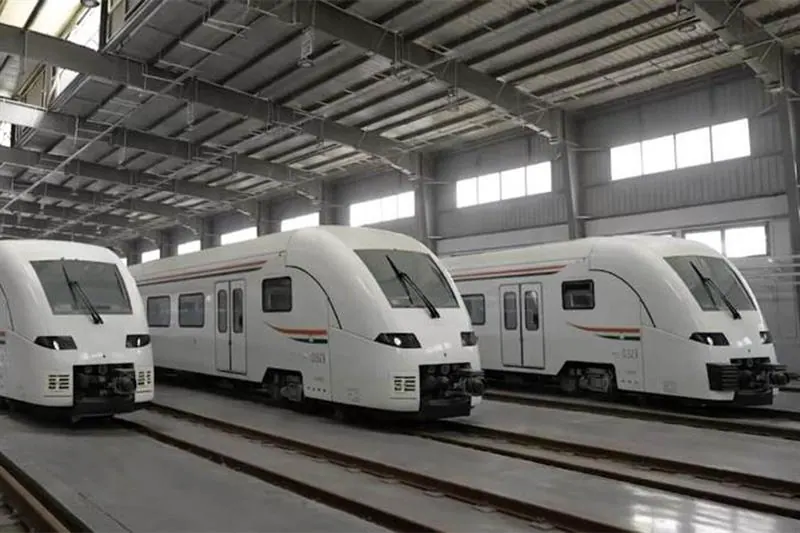
Egypt is set to launch high-speed electric train services connecting Ain Sokhna on the Red Sea to Marsa Matrouh on the Mediterranean via Cairo and Alexandria in July 2027. This was announced by Transport Minister Kamel Al-Wazir. The new railway network will rely on high-speed electric trains in line with the global shift towards clean energy. The project aims to expand Egypt's railway network and significantly increase its capacity for transporting passengers and freight.
The existing diesel railway network in the Nile Valley is operating at full capacity, leaving no space for an additional track or more train services along the route. This prompted the government to develop a new railway network in the Nile Valley's desert hinterland. Three main routes of Egypt's high-speed electric rail network are under construction. The first route will run from Ain Sokhna on the Red Sea to Marsa Matrouh and Salloum on the Mediterranean, passing through Cairo and 6 October City.
The high-speed electric rail network under construction is planned to extend by about 2,250 kilometres, with the three main routes totalling roughly 2,000 kilometres. The government has set July 2027 as the target date for Egyptians to begin using the Ain Sokhna-Marsa Matrouh high-speed electric train, which passes through Alexandria. This project will significantly increase Egypt's railway network capacity for transporting passengers and freight.
The ongoing upgrade of the existing railway network is expected to raise passenger capacity to about 2 million passengers a day by 2030. The high-speed electric network will add capacity for another 2.5 million passengers daily. The new network is also expected to help increase freight transport capacity to about 13 million tons annually. This upgrade will have a significant impact on Egypt's transportation sector.
The high-speed network will operate three types of trains: high-speed electric trains capable of reaching 250 kilometres per hour and stopping in governorates; regional trains with a top speed of 160 kilometres per hour and stops in administrative centres; and electric locomotives for freight trains, capable of reaching 120 kilometres per hour. This variety of trains will provide efficient and flexible transportation options.
Egypt's railway sector has received major government attention as it directly impacts citizens' daily lives. Egypt has the second-oldest railway network in the world after Britain, extending for about 10,000 kilometres, most of which began construction in 1856. The railway system previously had about 778 locomotives, nearly 3,000 passenger cars, and around 9,000 freight cars. It carried only about 700,000 passengers a day and between three and four million tons of freight annually.
The government launched a comprehensive railway development plan in 2014, covering locomotives and passenger and freight cars. The plan also included rehabilitating older rolling stock, railway tracks, and signalling systems, and transitioning from manual to mechanical signalling. These measures helped increase the number of passengers carried by Egypt's railways to about 1.5 million a day, compared with around 700,000 previously.
Key points
- Egypt targets July 2027 for high-speed electric train services from Ain Sokhna to Marsa Matrouh via Cairo and Alexandria.
- The high-speed electric rail network under construction is planned to extend by about 2,250 kilometres.
- The new network is expected to help increase freight transport capacity to about 13 million tons annually.