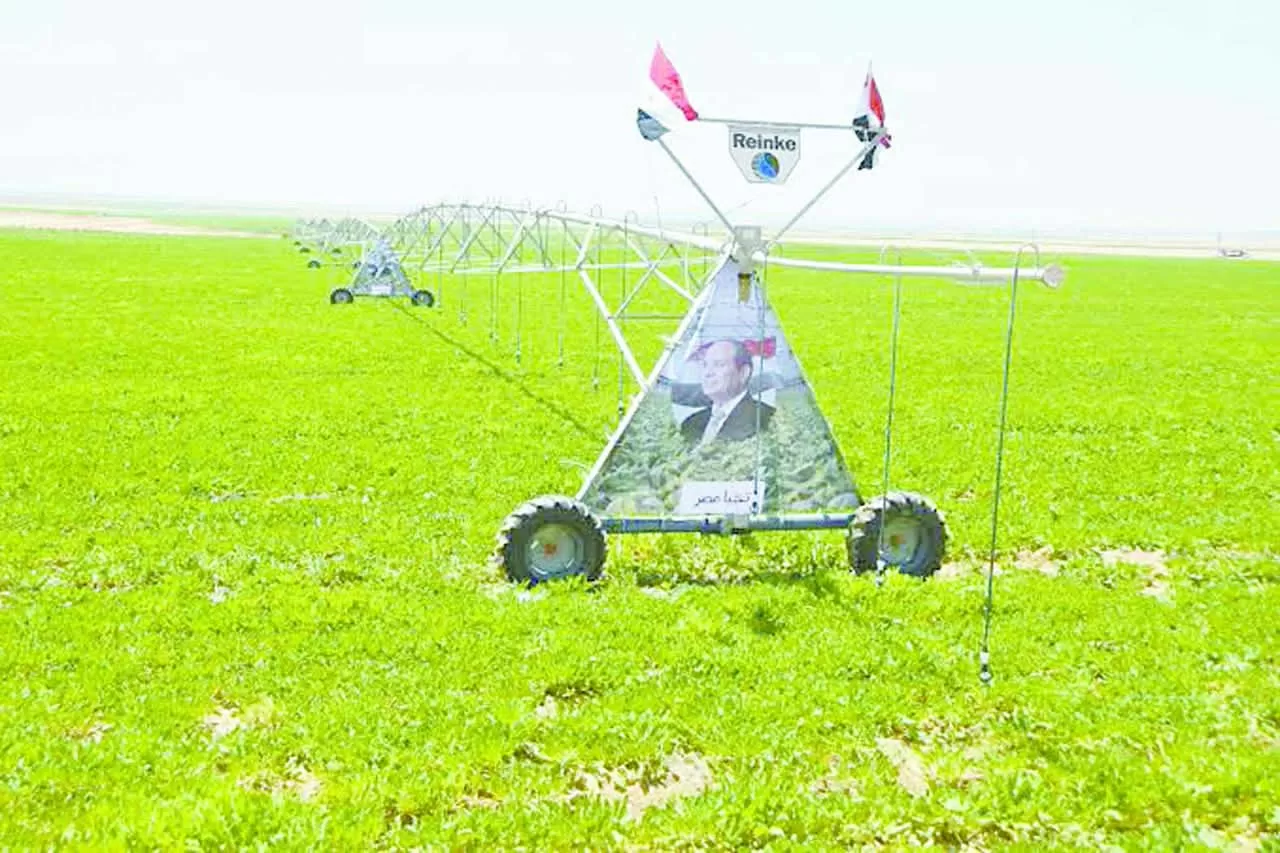
Egypt's agricultural sector is set to undergo a significant transformation as the government seeks to increase production and achieve self-sufficiency in key crops. The sector currently contributes around 17% to the country's GDP and employs approximately 25% of the workforce. With limited water resources, the government is promoting the use of modern irrigation systems and technologies to improve efficiency and reduce waste. This includes the adoption of drip irrigation and sprinkler systems, which can reduce water consumption by up to 40%.
The Egyptian government has set ambitious targets to increase agricultural production and achieve self-sufficiency in key crops. This includes expanding the cultivated area to 13.8 million feddans, up from 9.8 million feddans currently, and increasing investments in the sector. To achieve these goals, the government is implementing a range of initiatives, including the development of new agricultural projects in the Delta region and the use of treated wastewater for irrigation. The government is also promoting the use of technology, including precision agriculture, drones, and satellite imaging, to improve crop yields and reduce waste.
According to Dr. Sadiq Nassr, former Governor of Fayoum and head of the Egyptian Agricultural Economics Association, the country's water resources are limited, with an estimated 60 billion cubic meters available annually, compared to a demand of around 80 billion cubic meters. To address this gap, the government is investing in water treatment and recycling projects, including a $2.5 billion project to treat wastewater from the Bahr El-Baqr drain. This project is expected to provide an additional 2 billion cubic meters of water for irrigation.
Dr. Jamal Sayyam, an agricultural economist at Cairo University, notes that the current cultivated area of 9.8 million feddans consumes around 61.6 billion cubic meters of water, representing around 76% of the country's total water resources. He estimates that expanding the cultivated area to 13.8 million feddans will require an additional 16 billion cubic meters of water annually. To meet this demand, Sayyam advocates for the adoption of modern irrigation systems and technologies, as well as the use of treated wastewater for irrigation.
The Egyptian government is also promoting the use of cooperative farming models to improve efficiency and reduce costs. These models bring together small-scale farmers to share resources, expertise, and risk. According to Dr. Nassr, these models have the potential to increase crop yields, improve quality, and reduce costs, making Egyptian agriculture more competitive in the global market.
In addition to promoting modern irrigation systems and cooperative farming models, the Egyptian government is also investing in agricultural research and development. This includes the development of new crop varieties that are more resistant to disease and pests, as well as more efficient in their use of water and other resources. The government is also promoting the use of technology, including precision agriculture and drones, to improve crop yields and reduce waste.
The Egyptian government's efforts to modernize the agricultural sector are expected to have a significant impact on the country's food security and economy. With a growing population and limited water resources, the sector must become more efficient and productive to meet the country's needs. By adopting modern irrigation systems, cooperative farming models, and technologies, Egyptian agriculture can become more competitive, sustainable, and self-sufficient.
Key points
- Egypt aims to increase agricultural production and achieve self-sufficiency through modern farming techniques, technology, and innovation.
- The government is promoting the use of modern irrigation systems and technologies to improve efficiency and reduce waste.
- Cooperative farming models and agricultural research and development are also being promoted to improve efficiency and reduce costs.