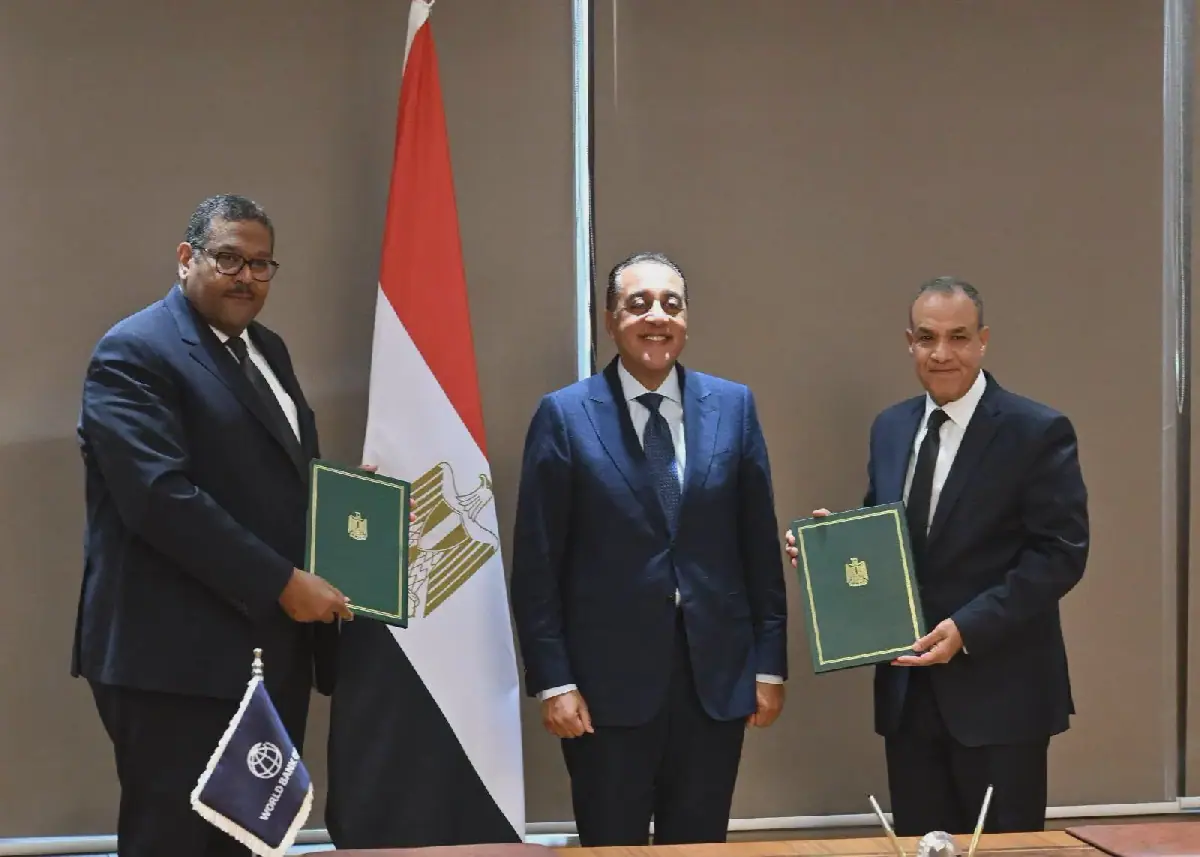
Egypt has signed a $1bn financing agreement with the World Bank under the second phase of its Development Policy Financing (DPF) programme. The programme aims to support economic reforms, strengthen resilience to external shocks, and advance the country’s green transition. Prime Minister Mostafa Madbouly witnessed the signing ceremony at the Ministry of Foreign Affairs headquarters in the New Administrative Capital.
The agreement was signed by Foreign Minister and Minister of International Cooperation and Egyptians Abroad Badr Abdelatty, in his capacity as Egypt’s governor at the World Bank, and World Bank Regional Director Walid Al-Atbani. The programme is titled “Building Resilience, Creating Opportunities and Enhancing Wealth for Egypt’s Prosperity and Stability”. It aims to improve the business environment, stimulate private investment, and strengthen the competitiveness of the Egyptian economy.
The reform agenda under the programme includes improving the governance of state-owned enterprises, removing barriers to private investment and economic growth, promoting fair competition, enhancing domestic revenue mobilisation, and reducing government borrowing costs. These measures are expected to have a positive impact on the Egyptian economy and improve the business environment.
The second phase of the programme also incorporates social and environmental measures. These include expanding the beneficiary base of the Takaful and Karama social protection programmes, improving greenhouse gas emissions monitoring, and developing carbon credit markets. The programme aims to strengthen the financial sustainability of the electricity and water sectors, supporting Egypt’s transition towards a green economy.
The World Bank Group’s Board of Executive Directors approved the total $1bn financing in May 2026. This is in line with the strategic partnership framework between Egypt and the World Bank Group for 2023–2027. The financing is intended to support Egypt’s economic and institutional reform priorities, including implementation of the State Ownership Policy and the government’s privatisation programme.
The programme also supports Egypt’s efforts to address the impacts of climate change and achieve its development goals. This includes implementation of Egypt Vision 2030 and the National Climate Change Strategy 2050. The financing will help Egypt to achieve its economic and social development objectives and improve the living standards of its citizens.
The signing of the financing agreement is a significant step in Egypt’s efforts to implement economic reforms and achieve sustainable development. The programme is expected to have a positive impact on the Egyptian economy and improve the business environment, making it more attractive to investors and supporting economic growth.
Key points
- Egypt signs $1bn financing agreement with the World Bank to support economic reforms and a green transition.
- The programme aims to improve the business environment, stimulate private investment, and strengthen the competitiveness of the Egyptian economy.
- The financing is intended to support Egypt’s economic and institutional reform priorities, including implementation of the State Ownership Policy and the government’s privatisation programme.