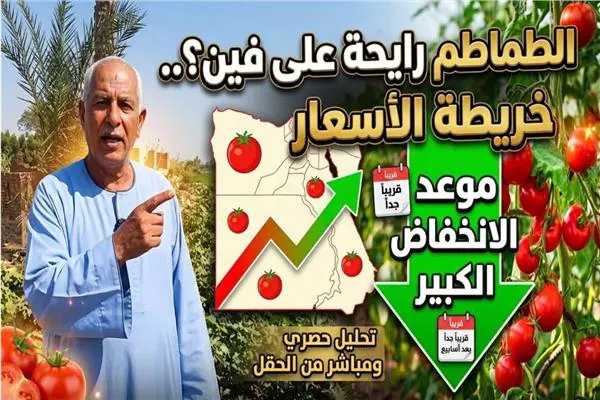
Tomatoes have become a staple in Egyptian households, and their price fluctuations have a direct impact on the food market. The price of tomatoes is influenced by various factors, including weather conditions, farming costs, and transportation expenses. The journey of tomatoes from the farm to the consumer's table involves multiple stakeholders, including farmers, traders, and consumers, each playing a crucial role in determining the final price. Egypt's tomato production is substantial, with the country being the fifth-largest producer globally, but the prices remain volatile.
In the Damanhour region, farmers have started planting tomato seedlings as early as July 1, with the first harvest taking place on October 5. The production process involves careful planning, with farmers relying on specific types of soil and seeds to ensure optimal yields. The "29" seed variety is commonly used in summer farming, and the soil type plays a significant role in determining the crop's quality and quantity. Light soils produce around 800 "counting units" (a measure of tomato quantity) per feddan, while heavy soils can yield up to 1100 units.
The winter season offers more favorable conditions for tomato cultivation, with the "winter crop" being considered the highest quality and most productive. This crop is divided into three main seasons: the "Arbait" season, which begins on October 1; the "greenhouse" season, which relies on specialized seedlings; and the "open-field" season, which starts on January 15. Farmers in the Damanhour region follow a strict irrigation schedule to prevent fungal diseases and ensure optimal growth.
The price of tomatoes in Egypt is influenced by various factors, including quality, with high-quality tomatoes commanding higher prices. In September, the price of high-quality tomatoes ranged from 280 to 300 pounds per unit. However, the "tomato worm" poses a significant threat to the crop, leading to price fluctuations. Farmers use periodic spraying with safe pesticides to combat this issue. The government's efforts to monitor and control the spread of the worm have been underway, with the Ministry of Agriculture reporting that infection rates are within acceptable limits.
Traders and wholesalers play a crucial role in determining tomato prices, as they collect the produce from farmers and transport it to various markets. The journey of tomatoes from the farm to the consumer involves multiple stakeholders, including traders, wholesalers, and retailers. In the El Obour and 6th of October cities, traders purchase tomatoes from farmers and sell them to retailers, who then sell them to consumers. The price of tomatoes varies depending on the region, with prices in some areas being higher than in others.
According to Hussein Abdel Rahman Abu Sadam, the head of the Egyptian Farmers' Syndicate, the price volatility is attributed to several structural and field challenges. These include the lack of contractual farming, which exposes farmers to market fluctuations; the dominance of intermediaries, which increases prices; and the rising costs of production, including seeds, pesticides, and equipment. Abu Sadam also noted that the irregularity of the seasons and the impact of climate change have contributed to the price fluctuations.
Abu Sadam expects tomato prices to remain high in the coming months, with the price per kilogram unlikely to drop below 30 pounds. However, he predicts that prices will stabilize and decrease with the start of the new year, as the winter crop production begins to hit the market. The Egyptian government has been working to support farmers and stabilize the market, but it remains to be seen whether these efforts will be successful in reducing price volatility. The industry is calling for more support and solutions to address the challenges facing tomato farmers and consumers.
Key points
- Egypt's tomato production is substantial, but prices remain volatile due to various factors.
- The country is the fifth-largest producer of tomatoes globally, with production exceeding 6.5 million tons annually.
- Prices are expected to stabilize and decrease with the start of the new year, as the winter crop production begins to hit the market.