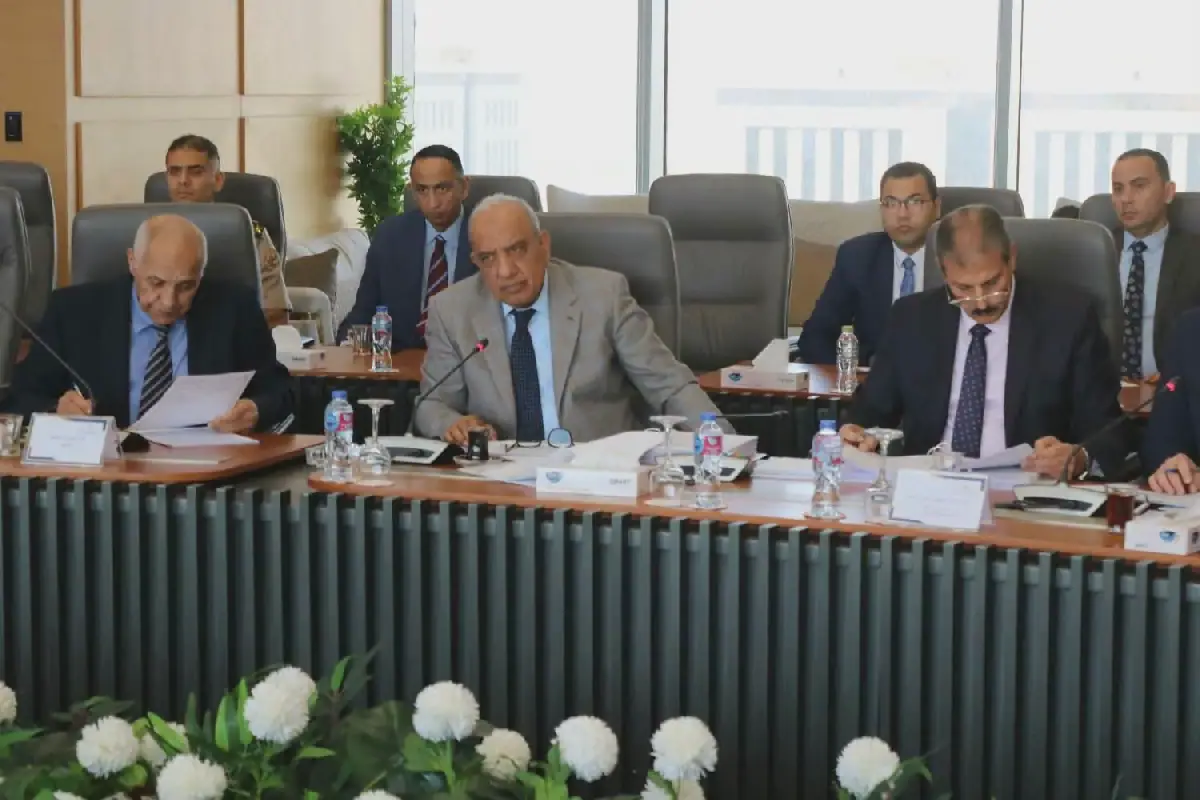
Egypt's Supreme Energy Council convened its 32nd meeting to discuss securing electricity supplies for 11 new industrial projects and increasing power capacity for existing factories. The meeting, held at the Ministry of Electricity and Renewable Energy headquarters, was chaired by Minister of Electricity and Renewable Energy Mahmoud Esmat. Also in attendance were Minister of Industry Khaled Hashem and Minister of Investment and Foreign Trade Mohamed Farid, along with representatives from relevant ministries and entities.
The council reviewed requests from ministries, government bodies, and companies regarding the provision of electricity, natural gas, and water for various industrial activities. These projects align with Egypt's industrial strategy and efforts to attract investment. The council examined proposals for new food manufacturing facilities in Sadat City, a tyre factory in Sokhna, and a steel manufacturing project in 10th of Ramadan City, among others.
The 11 projects discussed included an iron-rolling facility in Borg El Arab, an iron products manufacturing project in Sadat City, and ceramic and sanitary ware production facilities in the Suez Canal Economic Zone. The council also addressed increasing electricity capacity for existing industrial projects to accommodate higher production volumes and new production lines. These projects are expected to boost industrial activity and economic development in Egypt.
Minister Mahmoud Esmat stated that electricity was available to meet demand across different uses and voltage levels. He stressed the government's commitment to providing the necessary energy infrastructure to support industrial activity and economic development. The council's decisions align with Egypt's National Energy Strategy and sustainable development plans, which aim to support industry and facilitate technology transfer.
The council approved several proposed projects and discussed necessary arrangements for electricity and natural gas supplies. Esmat highlighted the importance of maximising economic returns from electricity generation and exploring alternative economic and investment opportunities related to the use of electricity and natural gas. This approach is expected to drive growth and development in Egypt's industrial sector.
Egypt's National Energy Strategy aims to increase the share of renewable energy in the country's energy mix to 45% by 2028. The strategy focuses on supporting industry, facilitating technology transfer, and localising advanced industries. By achieving this goal, Egypt aims to reduce its reliance on traditional energy sources and promote sustainable development.
The Supreme Energy Council's discussions reflect the Egyptian government's efforts to address the country's growing energy needs and support industrial development. By securing electricity supplies for new industrial projects and expanding existing ones, the government aims to drive economic growth and create new opportunities for investment and job creation in the industrial sector.
Key points
- The Supreme Energy Council discussed electricity supply requests for 11 new industrial projects, including food manufacturing facilities, a tyre factory, and a steel manufacturing project.
- The council aims to increase the share of renewable energy in Egypt's energy mix to 45% by 2028, as outlined in the National Energy Strategy.
- The government's efforts focus on supporting industrial activity, facilitating technology transfer, and localising advanced industries to drive economic growth and development.