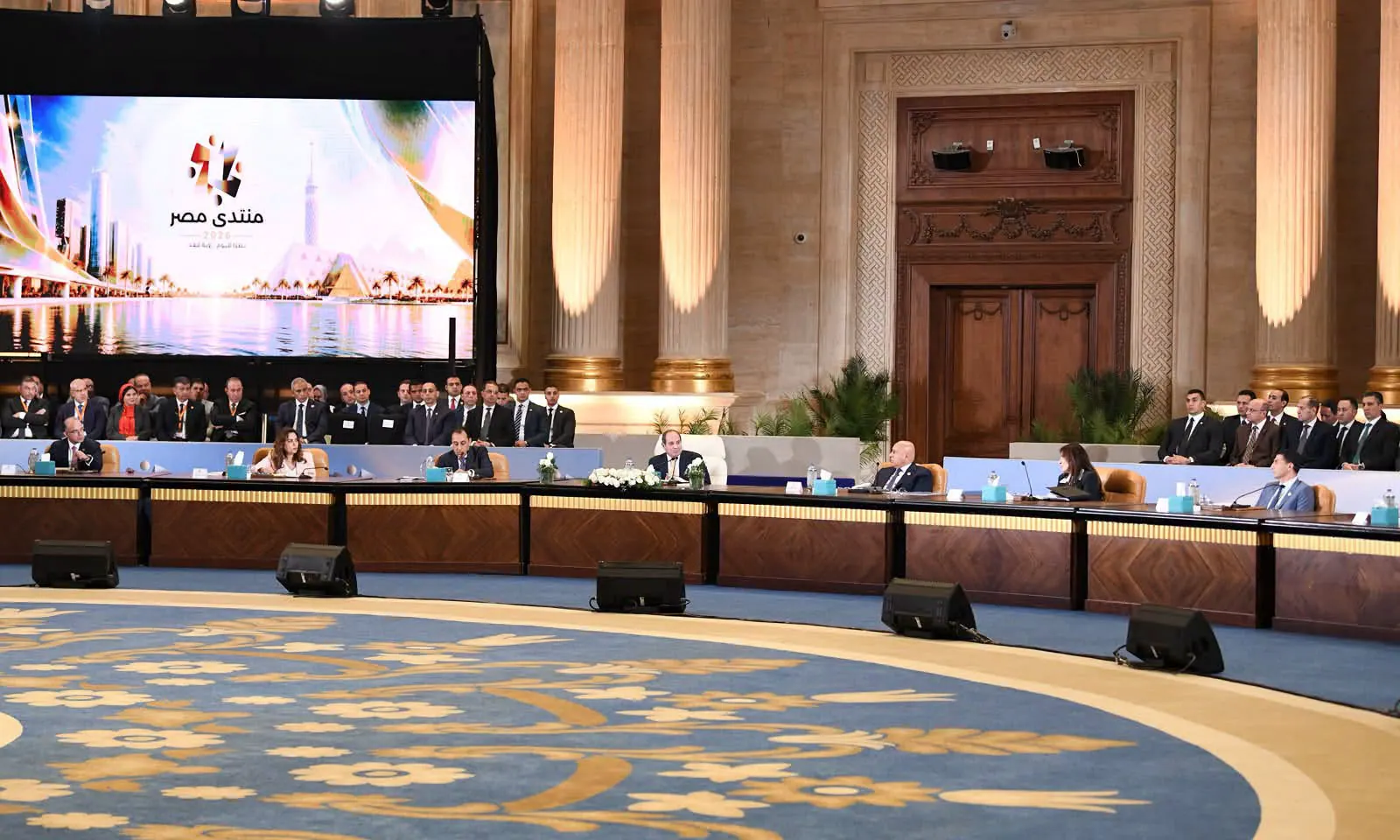
Egyptian President Abdel Fattah el-Sisi has announced a significant agreement worth EGP 11 trillion (approximately USD 202 billion) with the Talaat Moustafa Group to develop four major mixed-use projects across the country. This deal was unveiled during the "Urban Development" session at Egypt Forum 2026, held on October 20, 2026. The projects include a large-scale development north of Madinaty, an 11.3-million-square-metre project in central Alexandria, an integrated industrial and logistics hub in Abu Qir, and a North Coast destination inspired by the SouthMED development.
In addition to the massive development deal, President el-Sisi has directed the construction of hundreds of thousands of new rental units as part of a broader effort to address the country's housing challenges. The aim is to shift the focus away from home ownership and towards renting as a viable alternative. This move is intended to help alleviate the housing crisis that has contributed to the proliferation of slums and unplanned housing in Egypt. According to el-Sisi, the previous housing model, which emphasized ownership, has exacerbated the problem.
Presidential Spokesman Ambassador Mohamed El-Shennawy provided an overview of Egypt's urban expansion and transport developments since 2014. He highlighted the construction of 61 new cities and the delivery of 1.96 million new housing units. The government has also made significant strides in eradicating slums, developing Khedivial Cairo, and upgrading major cities and provincial capitals across 13 governorates. These efforts are part of a broader strategy to improve the quality of life for Egyptian citizens and promote sustainable development.
The Egypt Forum 2026 session also reviewed the state of the transport sector before 2014 and the achievements made since then. The government has invested heavily in roads, bridges, metro systems, electric traction, railways, maritime transport, and ports. The session outlined targets for improving governance, reducing accidents, and promoting green public transport across every governorate. Furthermore, the government aims to localize industry, including the domestic manufacturing of railway carriages and other means of transport.
President el-Sisi emphasized the need for practical approaches to addressing complex challenges, citing the country's historical concentration of population on a limited land area. He described this situation as unnatural and inhumane, leading to adverse social, security, cultural, and investment consequences. The president stressed that proposing "ideal" solutions often fails to account for the scale and complexity of the problems. He pointed to the spread of informal settlements around Cairo and the deterioration of transport services as examples of the consequences of inadequate urban planning.
The president also highlighted the state's success in resolving the electricity crisis, which he believes was essential for stabilizing the country, strengthening the state, and supporting development. He noted that national development typically takes 50 to 100 years and that expecting Egypt to complete such a transformation in 10 to 12 years is unrealistic. Instead, achieving significant progress within 20 to 30 years would be a notable accomplishment, given the country's limited resources and the scale of the challenges facing state institutions.
President el-Sisi reaffirmed the state's commitment to completing its ongoing development plans, including the "Decent Life" (Haya Karima) rural development initiative, by 2030 at the latest. He emphasized that this effort will be supported by partnerships with the private sector and state support for investors. The government's focus on collaborative approaches and sustainable development aims to drive growth and improve the quality of life for Egyptian citizens.
Key points
- Egypt reaches EGP 11 trillion deal with Talaat Moustafa Group for four major mixed-use projects
- President el-Sisi directs construction of hundreds of thousands of new rental units to address housing challenges
- Egypt aims to complete its ongoing development plans, including the "Decent Life" initiative, by 2030