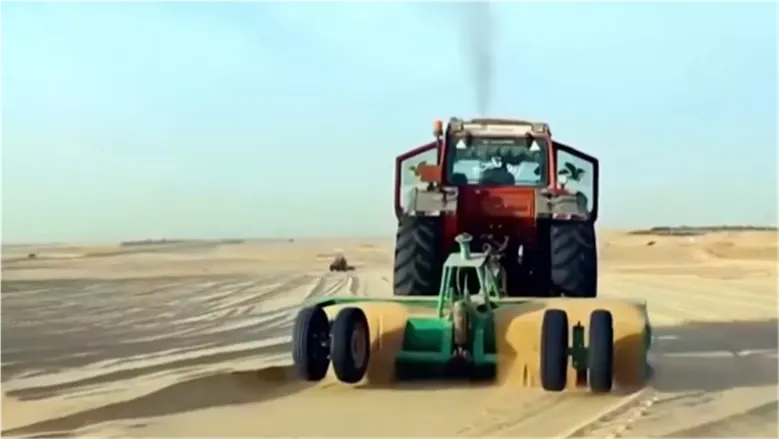
Egypt's government is executing a series of agricultural development projects in Sinai, aiming to bolster the country's food security. According to Dr. Ashraf Kamal, a professor of agricultural economics, these projects include the reclamation and cultivation of 54,000 feddans in north and central Sinai. Additionally, two water recycling stations, at Mahsama and Bahar El-Baqr, have been inaugurated, earning international awards. These initiatives are part of a broader strategy to support agricultural growth in the region.
The development projects in Sinai encompass a range of activities, including the resettlement of Bedouin communities through the establishment of rural and agricultural complexes. These complexes will provide advisory centers and services to farmers, contributing to the region's economic development. Furthermore, efforts are being made to enhance Lake Bardawil's productivity, particularly in fish production. A national project is also underway to expand olive cultivation, targeting an increase in cultivated areas from 140,000 to 390,000 feddans. This expansion aims to reduce the country's olive oil deficit and enhance self-sufficiency.
Dr. Kamal emphasized the significance of agricultural guidance in determining suitable crops for the region's soil and climate conditions. He noted that the Agricultural Research Center and the Desert Research Center are working together to identify optimal crop combinations for farmers. Sinai's diverse geography makes it suitable for growing various crops, including wheat, barley, peaches, and olives, as well as raising livestock such as sheep, goats, and camels. The region also shows promise for cultivating medicinal and aromatic plants.
The expansion of agriculture in Sinai is expected to have a positive impact on employment opportunities, both directly and indirectly. By increasing exports and substituting imports, the country aims to boost its self-sufficiency in essential crops, ultimately supporting food security. Dr. Kamal highlighted that Sinai's varied soil and climate conditions enable the production of high-quality crops with lower rates of pests and diseases, enhancing their export potential.
The Egyptian government has been actively investing in Sinai's agricultural sector to unlock its potential. By providing necessary infrastructure and support services, the authorities aim to encourage private sector participation and stimulate economic growth in the region. The development of Sinai's agricultural sector is also expected to contribute to the country's overall economic development and stability.
According to Dr. Kamal, the agricultural development projects in Sinai are being implemented in a sustainable and environmentally friendly manner. The projects prioritize water conservation, soil protection, and biodiversity preservation, ensuring that the region's natural resources are utilized efficiently. This approach will help maintain the long-term viability of agricultural production in Sinai.
The Egyptian government's efforts to develop Sinai's agricultural sector are part of a broader strategy to enhance national food security and promote economic growth. By investing in agricultural infrastructure and support services, the authorities aim to increase crop yields, improve farmers' livelihoods, and reduce the country's reliance on imports. The success of these projects is expected to have a positive impact on Egypt's food security and economy.
Key points
- Egypt's agricultural development projects in Sinai aim to increase crop yields and enhance food security.
- The projects prioritize sustainable and environmentally friendly practices to maintain the long-term viability of agricultural production.
- The development of Sinai's agricultural sector is expected to contribute to Egypt's overall economic growth and stability.