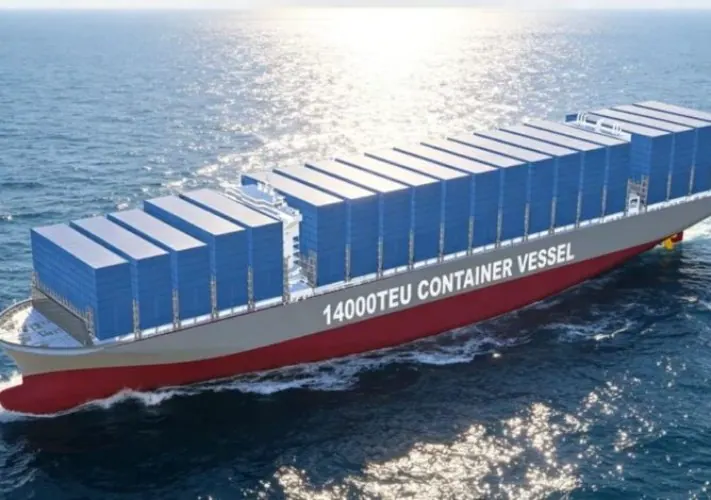
The global container shipping market is expected to experience increased supply pressures in 2027, driven by a growing fleet of container ships. According to a report by BIMCO, the global container fleet is expected to grow by 4.6% in 2026 and 9% in 2027. The report, titled "Increasing Supply Pressures," notes that the current global container fleet stands at around 34 million TEUs. The organization also reports that new ship orders currently exceed 14 million TEUs, equivalent to about 42% of the current fleet.
BIMCO attributes the growth in container shipping to a strong increase in global container volumes, which rose by 5.1% year-over-year during the first seven months of 2024. The growth was driven by exports from East and Southeast Asia, which accounted for more than half of the increase since the beginning of the year. The organization also notes that shipping volumes on main and regional routes increased by 6.3%, while backhaul volumes remained unchanged.
The report highlights that the current market conditions are being supported by the continued diversion of ships via the Cape of Good Hope, resulting in longer sailing distances and absorbing additional vessel capacity. However, some vessels remain unavailable for operation within the Gulf region. The return to the Suez Canal could potentially free up additional vessel capacity.
BIMCO expects that if the gradual return to normal conditions continues in 2027, the growth rate of demand for vessels may end up being five percentage points lower than current expectations. Once shipping routes return to normal, demand for vessels could decrease by around 10% compared to the scenario where the Cape of Good Hope route remains the preferred option.
The report also considers two scenarios related to the Strait of Hormuz, assuming it remains closed throughout 2026 and 2027, or returns to normal conditions throughout 2027. In both scenarios, BIMCO expects the supply of vessels to grow faster than demand during 2027. The organization also notes that demand faces broader economic risks, including high energy prices affecting consumer confidence in the US and EU.
The growth in the container shipping market is also driven by an increase in vessel deliveries, with BIMCO expecting the trend to continue. The organization notes that recycling activities, or vessel scrapping, are expected to remain low, resulting in a faster growth rate for the total fleet.
The report concludes that the increased supply of vessels, combined with the potential return to using the Suez Canal route, could disrupt the balance of supply and demand in the container shipping sector during 2027. This could have significant implications for the global shipping industry, including Egypt, which is a key player in the region.
Key points
- The global container fleet is expected to grow by 9% in 2027.
- The return to the Suez Canal could free up additional vessel capacity.
- Demand for vessels faces broader economic risks, including high energy prices.