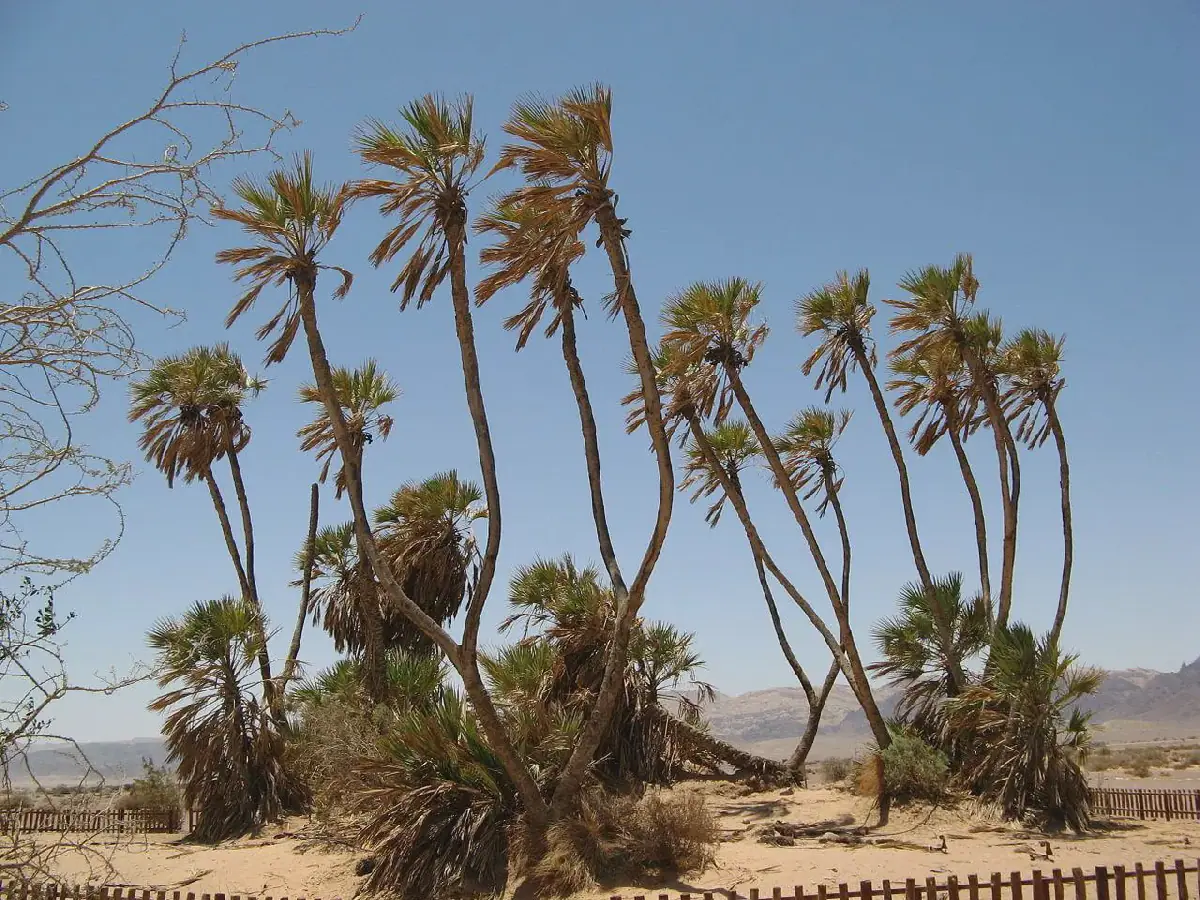
In Egypt's desert south, near the oasis town of Baris, doum palms have grown for centuries, drawing on groundwater through extensive roots. The "valley of doum" south of Baris is home to a notable stand of palms that grow without human cultivation. These trees have sustained themselves for centuries, and possibly millennia, with their deep roots.
The doum palm's unique characteristics set it apart from other palm species. It branches into several arms with broad fan-shaped leaves that have sharp spines. The tree takes around five to six years to bear fruit and can produce for decades, with some specimens living over 100 years. This slow growth rate may make it challenging for the doum palm to compete with crops that mature more quickly.
Doum palms have been an integral part of Egyptian culture for millennia. Ancient Egyptians valued the tree for its fruit, wood, and leaves, which were used for various purposes. The fruit was a common funerary offering, symbolizing renewal and longevity. Tomb paintings depict the doum palm among the gardens that the dead hoped to enjoy in the afterlife.
Archaeological discoveries have highlighted the significance of doum palms in ancient Egyptian society. In 2007, archaeologists led by Zahi Hawass found eight baskets of 3,000-year-old doum fruit in Tutankhamun's tomb. A papyrus records that Ramesses III offered 449,500 measures of doum fruit to the god Amun-Re, demonstrating the fruit's importance in ancient Egyptian rituals.
The doum palm's versatility has made it a valuable resource for local communities. The tree's wood is prized for its hardness and resistance to weather, making it suitable for building and crafting tools. The leaves are woven into baskets, mats, and hand fans, while the fibers are twisted into rope. The stone-hard seeds are carved into prayer beads and souvenirs.
The doum palm's fruit is rich in nutrients, including fiber, antioxidants, potassium, calcium, magnesium, and iron. The fruit is harvested from February to April and can be dried for storage. It is often soaked, simmered, and sweetened to make a brown drink served cold in summer and warm in winter. Scientists have recognized the doum palm's potential as a functional food, citing its nutritional value and medicinal properties.
Despite its resilience, the doum palm may face challenges in the modern era. A preference for crops with quicker returns may threaten the tree's survival. However, its ability to outlast pharaohs, droughts, and centuries of neglect suggests that the doum palm is a hardy and adaptable species.
Key points
- The doum palm's unique characteristics, such as its slow growth rate and extensive roots, allow it to thrive in Egypt's desert regions.
- The tree has been an integral part of Egyptian culture for millennia, with its fruit, wood, and leaves used for various purposes.
- The doum palm's fruit is rich in nutrients and has potential medicinal properties, making it a promising functional food.
Reporting sources
- Egypt’s Doum Palms Keep Growing Against the Odds · Egyptian Streets