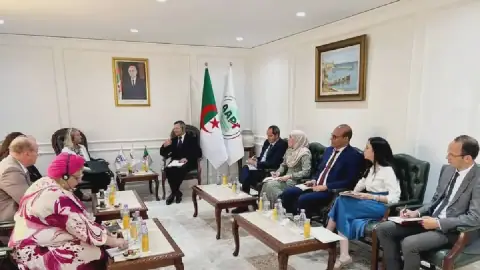
A recent cooperation protocol between Egypt and a foreign institution to train imams on renewing religious discourse has sparked debate in cultural and religious circles. The protocol has raised questions about the role of Egypt's Al-Azhar institution, which has a long history of producing religious scholars and shaping religious awareness in Egypt and the Islamic world. Al-Azhar has been associated with prominent figures such as Rifa'a al-Tahtawi, Muhammad Abduh, and Taha Hussein.
Egypt has a rich history of producing scholars who have contributed significantly to the country's intellectual and cultural landscape. Al-Azhar has been at the forefront of this, with many of its graduates going on to become influential figures in Egyptian society. The question has been raised as to why Egyptian imams need to receive training from foreign institutions when Egypt has a wealth of expertise in-house. This has led to a wider discussion about the role of Al-Azhar and Egypt's position in the Arab and Islamic world.
The debate is not about rejecting cooperation or the exchange of expertise, but rather about the nature of the protocol and its implications for Al-Azhar's role in shaping religious discourse. Al-Azhar has been a source of religious knowledge for centuries, and it is unclear why it is not being utilized to train Egyptian imams. The issue has sparked a necessary conversation about the future of religious discourse in Egypt and the role of Al-Azhar in this process.
The discussion has also raised questions about the credentials of the foreign institution involved and the potential benefits of the training program. While some have argued that the program is necessary to bring new ideas and perspectives to Egypt, others have questioned whether it is sufficient to address the country's complex social and cultural challenges. The government has been urged to provide more information about the program and its objectives.
The Minister of Endowments, Dr. Osama Al-Azhari, has been invited to provide clarification on the protocol and its goals. The request for clarification is not seen as a challenge to the government's authority but rather as a legitimate attempt to ensure transparency and accountability. The public has a right to know why this program was chosen and what benefits it is expected to bring.
Egypt's religious scholars have expressed confidence in the government's vision and have emphasized the importance of transparency in this matter. They have also highlighted the need for a nuanced discussion about the role of Al-Azhar and Egypt's position in the Arab and Islamic world. The goal is to ensure that any efforts to renew religious discourse are grounded in Egypt's rich cultural and intellectual heritage.
The debate over the protocol has also highlighted the need for a more nuanced understanding of the complexities of religious discourse in Egypt. It has raised important questions about the role of Al-Azhar, the government, and civil society in shaping the country's religious and cultural landscape. Ultimately, the goal is to ensure that any efforts to renew religious discourse are in the best interests of Egypt and its people.
Key points
- The debate over the protocol has sparked a necessary conversation about the role of Al-Azhar and Egypt's position in the Arab and Islamic world.
- Egyptian religious scholars are questioning the need for foreign training on religious discourse renewal.
- The government has been urged to provide more information about the program and its objectives.