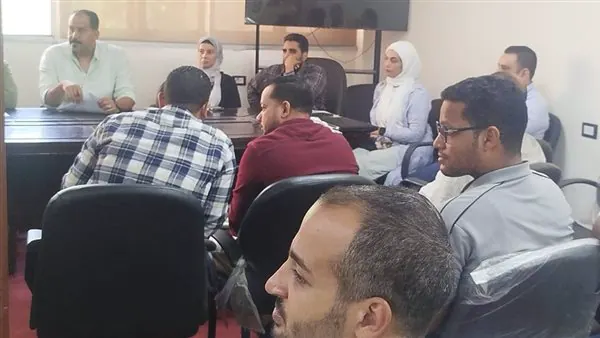
The Egyptian Ministry of Health's Qena Directorate of Health Affairs recently convened a meeting to discuss enhanced oversight of private medical facilities in the region. Led by Dr. Khaled Hamam, Director of the Free Treatment Department, the meeting aimed to review current regulations and licensing procedures for private healthcare providers. This move is part of the ministry's efforts to ensure compliance with established guidelines and regulations.
The meeting covered several key topics, including the review of new instructions and circulars, implementation of decisions made by the Ministry of Health and Population, and verification of data on private medical facilities. Participants also discussed strategies for inspecting and monitoring these facilities, with a focus on high-risk or complaint-prone establishments. This initiative seeks to guarantee the quality and safety of healthcare services provided to patients.
Dr. Hamam emphasized the importance of regular inspections and monitoring of private medical facilities, particularly those providing specialized care such as obstetrics and gynecology, intensive care, and surgical services. He stressed the need for adherence to established protocols, including the use of partographs and Robson classification for cesarean section cases. Furthermore, the department will verify the qualifications and licensure of medical professionals working in these facilities.
The Qena health department also reviewed the status of complaints and reports received regarding private medical facilities. Dr. Hamam highlighted the need for prompt investigation and resolution of these complaints, ensuring that facilities address any concerns and take corrective action. This process aims to maintain patient trust and satisfaction with healthcare services.
Dr. Essam Nabil, Undersecretary of the Ministry of Health in Qena, underscored the significance of continued field monitoring and evaluation of private medical facilities. He emphasized the need for swift action in response to any irregularities or complaints, in accordance with established procedures. This approach seeks to ensure patient safety, quality of care, and adherence to regulatory requirements.
Key areas of focus for the Qena health department include centers for women's and maternity care, intensive care units, nurseries, surgical centers, dialysis centers, radiology and endoscopy centers, laser surgery or cosmetic centers, and addiction treatment centers. The department will prioritize inspections of these high-risk facilities to guarantee compliance with safety and quality standards.
The Qena health department's efforts aim to enhance the quality and safety of healthcare services in the region. By strengthening oversight and monitoring of private medical facilities, the department seeks to ensure that patients receive high-quality care while protecting public health. The initiative also underscores the importance of collaboration between healthcare providers, regulatory agencies, and patients in maintaining high standards of care.
Key points
- The Qena health department is enhancing oversight of private medical facilities to ensure compliance with regulations and guidelines.
- The department is prioritizing inspections of high-risk facilities, including those providing specialized care such as obstetrics and gynecology, intensive care, and surgical services.
- The initiative aims to guarantee patient safety, quality of care, and adherence to regulatory requirements in the region.