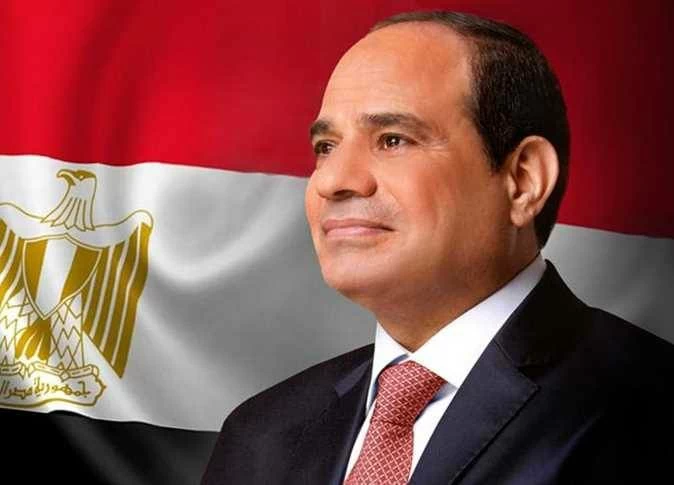
Egyptian President Abdel Fattah El-Sisi has issued a decree delegating some of his powers to the Minister of Defense and Military Production, Khaled Hegazy, regarding general mobilization. The decree, published in the official gazette on September 22, allows the minister to exercise certain powers under the 1960 Law No. 87 on General Mobilization. This delegation is set to last for one year, starting in November.
The delegation of powers is a routine administrative and legal procedure that occurs with the appointment of a new defense minister, according to Lieutenant General Mohamed El-Ghobari, former director of the National Defense College. El-Ghobari explained that the president, as the head of the National Defense Council, delegates specific powers to the defense minister under the law. The defense minister will exercise these powers alongside their primary responsibilities.
The decree does not imply a change in the state of general mobilization, El-Ghobari clarified. He stated that the mobilization plan is already in place, and the recall of reserve personnel or increase in unit strength is linked to training exercises and projects implemented by the armed forces. General mobilization involves the activation of a country's military and civilian resources in preparation for war or a national emergency.
El-Ghobari further explained that the general mobilization plan is not limited to wartime but also applies during peacetime, particularly in terms of continuous training. He cited the example of several military units that execute projects and require the recall of personnel for training purposes. This process enables the completion of the required force for the armed units.
The decision to delegate powers to the defense minister has sparked questions about its connection to the regional situation and potential war. However, El-Ghobari dismissed these concerns, stating that the decision is a routine procedure and not related to any extraordinary circumstances. He emphasized that a state of war would be preceded by other measures, such as declaring a state of emergency and implementing a strategic plan.
Lieutenant General Abu Bakr El-Gendy, former Minister of Local Development, offered a different perspective on general mobilization. He noted that it encompasses not only the armed forces but also the mobilization of civilian resources, including transportation, production, and services. El-Gendy highlighted the importance of having a ready-made system to deal with exceptional circumstances, citing the 2011 events as an example.
During the 2011 events, the Egyptian state successfully utilized its mobilization system to respond to the crisis, particularly in transporting essential goods such as wheat. El-Gendy attributed this success to the existence of a prior database and inventory of civilian resources, which allowed for swift action without starting from scratch. The Central Agency for Public Mobilization and Statistics plays a crucial role in this process, gathering data on available resources and capabilities.
Key points
- The delegation of powers to the defense minister is a routine procedure that occurs with the appointment of a new defense minister.
- General mobilization in Egypt involves the activation of both military and civilian resources in preparation for war or a national emergency.
- The decision to delegate powers to the defense minister does not imply a change in the state of general mobilization or an imminent war.