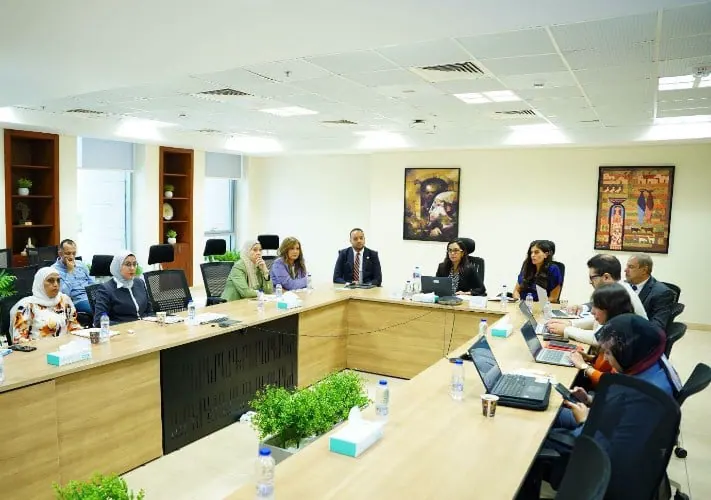
The Egyptian Ministry of Planning and Economic Development, in partnership with the World Bank's environmental and social experts, recently held an intensive training workshop to enhance the management and implementation of environmental and social aspects of investment projects. The workshop aimed to build the capacity of ministry staff according to the latest national and international standards. The event was attended by high-ranking officials, including Dr. Mona Essam, Assistant Minister of Planning for Sustainable Development.
The World Bank delegation, led by Amal Felts, a senior social development specialist, reviewed the bank's Environmental and Social Framework (ESF), which provides a comprehensive set of standard policies to address environmental and social risks associated with investment projects. Felts emphasized the bank's commitment to providing continuous technical and institutional support to the Egyptian government and relevant ministries to deepen understanding and application of environmental and social standards.
Mustafa Metwaz, advisor to the Minister of Planning for follow-up, explained that the ministry is working on innovative financing mechanisms for infrastructure projects in partnership with the private sector, in coordination with relevant ministries, to reduce the financial burden on the state's general budget. He noted that the ministry, in collaboration with the World Bank and drawing on successful international experiences, has prepared a final proposal for a "basic infrastructure project financing guarantee mechanism".
The proposed mechanism is designed to be a specialized national platform for managing and mitigating credit risks and mobilizing private capital by providing professionally managed guarantees. The mechanism features a unified assessment framework that provides a single window for evaluating and approving projects, ensuring speed and transparency. It also involves managing financial risks by converting direct sovereign guarantees into managed financial obligations.
The mechanism includes financing in local currency to reduce foreign exchange risks by providing financing options in Egyptian pounds. It also involves international partnerships, including supporting the mechanism's capital with the International Bank for Reconstruction and Development (IBRD), the International Finance Corporation (IFC), and international financial institutions. The mechanism prioritizes sectors such as renewable energy, water desalination, sanitation, transportation, and housing.
The workshop discussed the implementation of the proposed mechanism and its potential to support sustainable development in Egypt. The Ministry of Planning and Economic Development emphasized its commitment to working with the World Bank and other partners to ensure the successful implementation of the mechanism and to attract more responsible investments that meet sustainable development requirements.
The collaboration between the Egyptian Ministry of Planning and Economic Development and the World Bank reflects the ongoing efforts to enhance infrastructure financing and promote sustainable development in Egypt. The two parties are working together to address the challenges associated with infrastructure financing and to explore innovative solutions to support Egypt's development goals.
Key points
- Egypt's Ministry of Planning and Economic Development and the World Bank are collaborating on a new financing mechanism for infrastructure projects to mitigate foreign exchange risks and promote sustainable development.