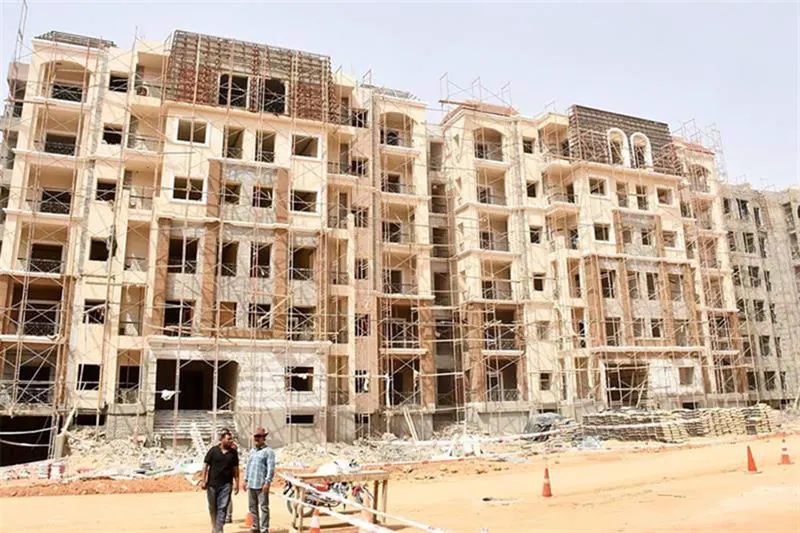
Egyptians buying homes off-plan are facing a difficult equation: paying for their property over 12 or 14 years while waiting around five years for the project to be completed. This model puts their money under pressure if construction is delayed or a developer runs into financial trouble. The issue has come into sharper focus as the government reviews the status of around 130 real estate companies and projects facing delivery delays.
The off-plan market in Egypt relies heavily on customer down payments and instalments to finance projects, amid limited availability of long-term bank financing. However, construction materials, land, and financing costs have risen sharply in recent years, while exchange-rate movements have added further pressure on developers whose units were sold years before completion. This mismatch has raised a fundamental question for the market: when buyers pay for a specific project, should their money remain tied to that project until their homes are delivered?
Fathallah Fawzi, deputy chairman of the Egyptian Businessmen's Association, said the expansion of payment periods has become one of the factors behind liquidity pressures facing some developers. Payment periods for units can extend to 12 or 14 years, while projects are generally expected to be completed and delivered within around five years. This creates a mismatch between the timing of customer payments and developers' construction-financing needs.
Some companies lack sufficient experience to manage cash flows and reconcile the timing of sales and collections with construction costs. For buyers, this creates a particular vulnerability: they can remain bound by their payment schedules even when the project itself is falling behind. Strong sales do not always mean enough cash to complete the project, according to Mohamed El-Bostany, chairman of the Real Estate Developers Association.
El-Bostany said the core problem is the imbalance between actual execution costs and the cash flows collected from customers. The market relies heavily on customer down payments and instalments to finance projects, amid limited availability of long-term bank financing. At the same time, construction materials, land, and financing costs have increased substantially in recent years.
Exchange-rate movements have further widened the gap between the price at which some units were sold and the cost of completing them. The dollar exchange rate rose from around EGP 15 to nearly EGP 50 over roughly five years, affecting construction costs. Fawzi estimated that construction costs rose from around EGP 3,000-4,000 per square metre to nearly EGP 15,000.
The growing financing pressure has renewed calls for independent escrow accounts for real estate projects. Under such a system, customer payments would be deposited into an account dedicated to the project and released according to certified construction progress. El-Bostany supports the principle of protecting buyers' money and linking most of it to the project for which it was paid.
Key points
- Buyers in Egypt's off-plan property market may pay for their property over 14 years while waiting around five years for the project to be completed.
- The off-plan market in Egypt relies heavily on customer down payments and instalments to finance projects, amid limited availability of long-term bank financing.
- There are calls for independent escrow accounts for real estate projects to protect buyers' money and ensure that funds are directed towards the projects for which they were paid.