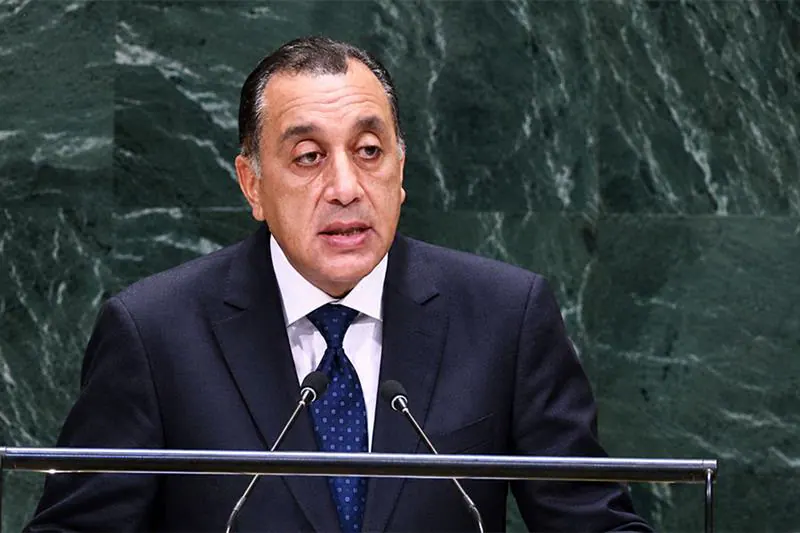
Egyptian Prime Minister Mostafa Madbouly has stated that the Nile River's flow is an existential issue for the Egyptian people, allowing for no compromise. He made these remarks at the 81st session of the UN General Assembly in New York, where he led Egypt's delegation on behalf of President Abdel-Fattah El-Sisi. Madbouly's comments reiterated Egypt's position in its longstanding dispute with Ethiopia over the Grand Ethiopian Renaissance Dam.
Madbouly emphasized that shared water resources cannot be managed through unilateral measures or by imposing a fait accompli. Instead, he advocated for cooperation, good-neighborliness, and binding agreements consistent with international law that protect the rights of all parties sharing the Nile. This stance is in line with Egypt's concerns regarding the Grand Ethiopian Renaissance Dam, which Ethiopia completed and inaugurated unilaterally in 2025 without an agreement with downstream nations Egypt and Sudan.
The dispute over the Grand Ethiopian Renaissance Dam has been taken up by the UN Security Council on several occasions without producing a comprehensive settlement. Madbouly stressed that the Nile is not merely an economic resource; it is a lifeline to which the very existence and development of Egyptian society have been inextricably linked throughout history. Egypt believes that transboundary water resources should be a realm for cooperation and integration rather than conflict.
Madbouly also highlighted that water security and development are not conflicting goals, but rather complementary ones, provided there is political will, good faith, and respect for international law. He affirmed that Egypt reserves its legitimate right, guaranteed by the UN Charter and international law, to protect its water security and safeguard the existential interests of its people. Egypt does not oppose any people's right to development, but defends a clear and just principle.
During his speech, Madbouly stressed that the world does not need a merely formal multilateralism that brings countries together for open discussions. Instead, he called for effective multilateralism in which every country has a voice and every people receives a fair share of decisions, opportunities, and resources. He emphasized the urgent need to restore recourse to international law and avoid policies of power, polarization, and double standards.
Madbouly said that the countries of the Global South, which account for the overwhelming majority of the world's population, are among those most affected by the erosion of international law and the role of international organizations. He called for fairness in representation and decision-making, fairness in the application of the law, and fairness in the distribution of development and transformation opportunities.
Madbouly also addressed the Palestinian cause, saying that it remains the clearest evidence of the existing imbalance in the international system. He called for consolidating the ceasefire in the Gaza Strip and ensuring full compliance with it. He reiterated Egypt's categorical rejection of any attempt to displace the Palestinian people from their land, whether from the Gaza Strip or the West Bank, including East Jerusalem.
Key points
- Egypt's Prime Minister Mostafa Madbouly emphasizes the importance of Nile water security at the UN General Assembly.
- Madbouly calls for a binding agreement under international law to safeguard the rights and interests of all countries sharing the Nile waters.
- Madbouly stresses the need for effective multilateralism and fairness in the international system.