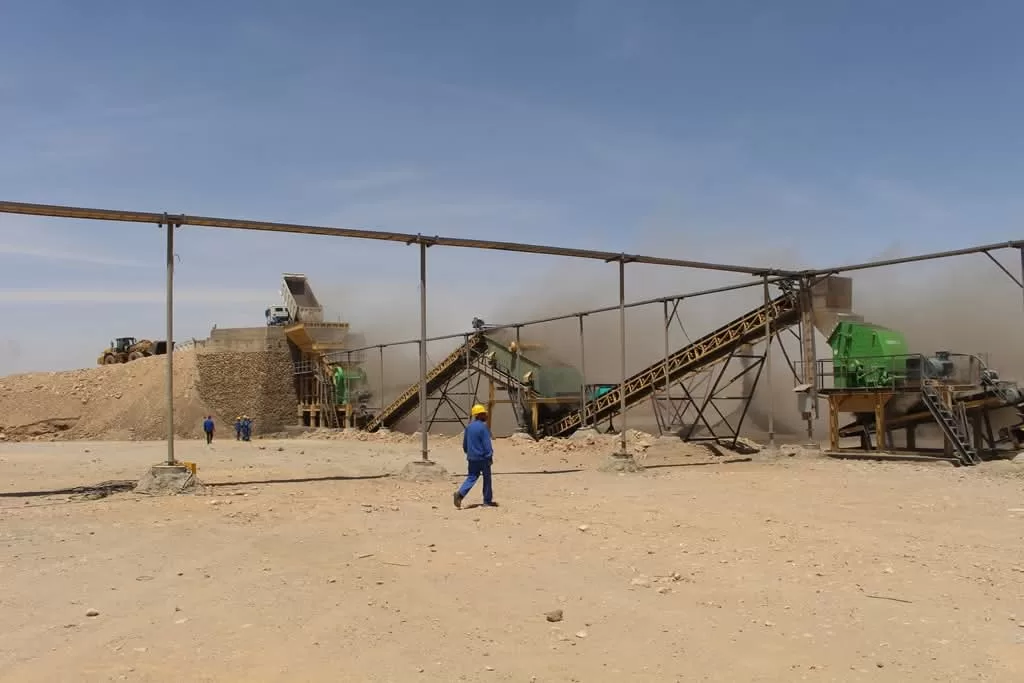
Egypt's New Valley governorate, a vast territory in the southwest, is taking a new step in its opening to international investment and partnerships. The region's position, vast area, and abundant agricultural and mineral resources make it an attractive location. Phosphate is one of its main assets, and the governorate also has significant potential in renewable energy, tourism, urban planning, and agriculture-related industries.
China is playing an increasingly important role in the region's development. Over the past few years, Sino-Egyptian relations have evolved from traditional cooperation to a comprehensive strategic partnership covering industry, agriculture, infrastructure, energy, technology, and tourism. This cooperation is particularly significant in 2026, marking the 70th anniversary of diplomatic relations between Egypt and China.
During Chinese President Xi Jinping's visit to Egypt in September 2026, President Abdel Fattah Al-Sissi and his Chinese counterpart agreed to deepen the comprehensive strategic partnership and expand cooperation in sectors such as industry, renewable energy, agriculture, technology, digital transformation, tourism, education, and scientific research. This partnership aims to strengthen economic ties and promote mutual development.
The mining sector is a notable example of Sino-Egyptian cooperation in the New Valley, with projects transitioning from opportunity research to large-scale industrial projects. Preparations are underway for an industrial complex to produce phosphoric acid in the Abou Tartour plateau. The project aims to increase the value added of Egypt's mineral resources by developing on-site processing activities.
In 2025, definitive agreements and contracts were signed to launch the project, with the Minister of Petroleum and the Governor of New Valley present. A general enterprise contract was signed with a consortium formed by Chinese companies CSCEC and ECEC. The investment cost for the current phase is estimated at $658 million.
The complex is expected to produce around 250,000 tonnes per year of commercial phosphoric acid at high concentration in its first phase, using phosphate extracted from Abou Tartour mines. This project is one of the main initiatives to increase the value added of Egypt's mineral resources, moving beyond simple phosphate ore export.
The New Valley's push for Chinese investment is part of a broader strategy to boost economic growth and development in the region. By leveraging its natural resources and partnering with China, the governorate aims to create new industrial, agricultural, and technological projects, ultimately enhancing its economic prospects and contributing to Egypt's overall growth.
Key points
- Egypt's New Valley region is accelerating its opening to Chinese investment, focusing on mining, agriculture, renewable energy, and technology.
- A new industrial complex will be built to produce phosphoric acid, with an estimated investment cost of $658 million.
- The Sino-Egyptian partnership aims to strengthen economic ties and promote mutual development, with a focus on industry, renewable energy, agriculture, and technology.